 Comparison
Best Charities for Donating Furniture From an Estate
Quick Summary
Donating furniture from an estate is easiest through local charities that offer home pickup, such as Habitat for Humanity ReStore, The Salvation Army, Goodwill, and AMVETS. Pickup rules vary by location, so call the specific store before scheduling. Only floor-ready, structurally sound pieces are reliably accepted for resale.
- Habitat for Humanity ReStore, The Salvation Army, Goodwill, and AMVETS are the top options families consider.
- Pickup coverage is the deciding factor, since large dining sets and bedroom suites are hard to move alone.
- Only clean, structurally sound, odor-free pieces with working hardware reliably get accepted for resale.
- Call the local store or chapter, not the national office, because acceptance lists and pickup zones vary.
- Photograph each piece before pickup so the estate has a record if an item is declined or damaged.
Table of Contents
- Which Charities Pick Up Furniture From an Estate
- Furniture Donation Acceptance Rules to Check First
- Organizing an Estate Cleanout Furniture Donation
- Preparing Estate Furniture for Pickup
- Tax Deductions and Valuation for Donated Estate Furniture
- What to Do With Furniture Charities Will Not Take
- Booking Help With Your Parent's Estate Cleanout
- Frequently Asked Questions
Best Charities for Donating Furniture From an Estate
Last Updated: November 5, 2026
Which Charities Pick Up Furniture From an Estate
Donating furniture from an estate is one of the most practical ways to clear a home, but the answer depends on where you live and what you have. Many national charities offer pickup, while others only accept drop-offs.
Habitat for Humanity's Habitat ReStore donation guidelines accept new and gently used furniture, appliances, and building materials. Each local ReStore sets its own pickup rules, so you need to call the store nearby before you schedule anything.
The top options most families look at are:
- Habitat for Humanity ReStore: Accepts furniture, appliances, and household goods. Acceptance and pickup vary by location.
- The Salvation Army: Lists furniture donation among its accepted items, with pickup available in many locations.
- Goodwill: Offers furniture pickup in some areas. Confirm coverage with the local organization.
- AMVETS: Provides free home pickup in select service areas, subject to screening and approval of each piece.
Pickup coverage is the deciding factor for most estates. If no nearby charity offers pickup, a third-party donation logistics service such as ReSupply's furniture donation pickup service can connect you with local charities that do.
Furniture Donation Acceptance Rules to Check First
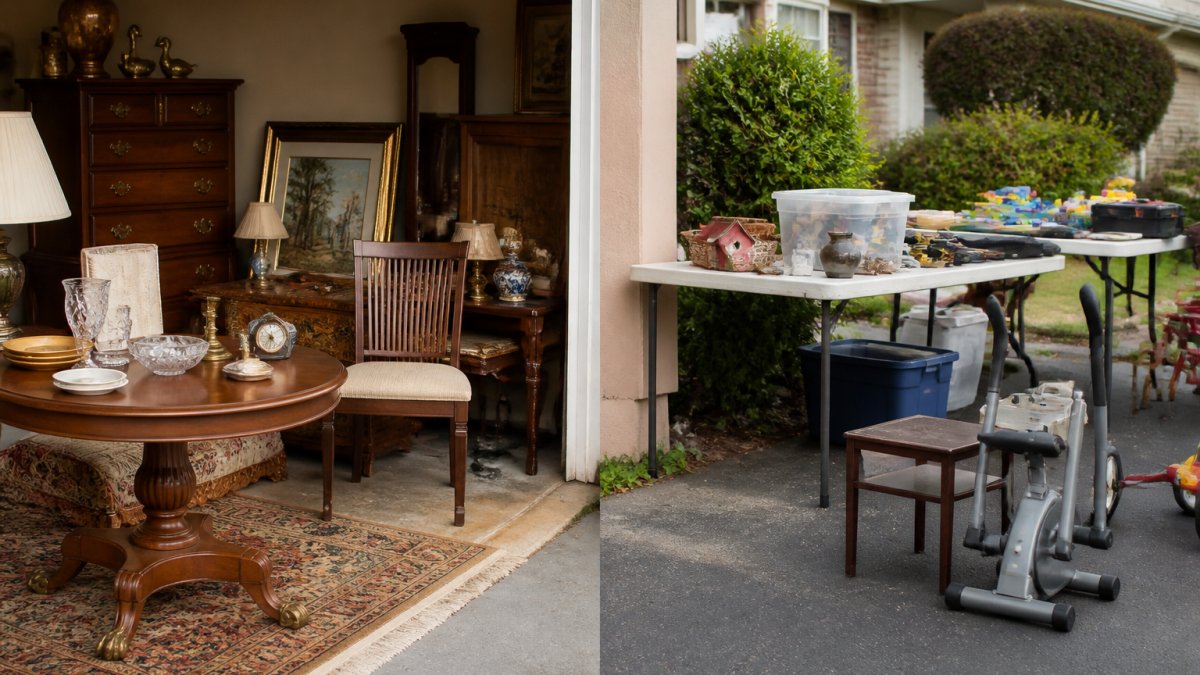
Most charities publish condition standards, but the standards are written for retail resale, not for estate contents. That mismatch is why estate pickups get turned away at the door: a piece that has been in a family for forty years can be structurally perfect and still fail a resale floor test. Before you schedule anything, grade each piece against the standards below and confirm the specific rules with the receiving organization.
The three-tier condition grading most donation centers use
Donation staff often sort furniture into categories based on condition:
- Floor-ready (resale quality): Clean, structurally sound, no odor, all hardware working, upholstery intact. This is the only tier that reliably gets accepted for resale.
- Repairable or salvage: Solid frame but a torn cushion, a missing drawer pull, or light surface wear. Some organizations route these to a repair shop or outlet store; many reject them outright because repair labor exceeds resale value.
- Recycle or dispose: Broken structure, pest evidence, mold, heavy staining, or safety-flagged items. These should never be loaded on a donation truck.
What "gently used" actually means in practice
"Gently used" is not a legal standard; it is a resale judgment. Practitioners typically apply these tests:
- Structural integrity: The piece supports weight without wobble, racking, or creaking. Joints are tight; legs are not split.
- Upholstery and cushioning: No tears, burns, pet damage, or persistent odor. Foam has not collapsed. Reversible cushions are a plus because they signal care.
- Surfaces and finish: Normal patina is acceptable; deep gouges, water rings, peeling veneer, and heavy sun fading are not.
- Hardware and function: Drawers glide, doors close, hinges and pulls are present. Missing hardware is a frequent rejection reason on dressers and cabinets.
- Cleanliness and pests: No bed bug evidence, mold, mildew, or rodent droppings. Upholstered items with any pest history should be excluded from donation entirely.
- Safety and current standards: Ask the organization about any item with a safety history before pickup.
Categories that get refused even when they look fine
Some categories may be restricted for liability or resale reasons rather than condition. Ask the receiving organization about each category separately, since a store that accepts one type of item may still refuse another.
How to confirm rules before pickup day
- Call the specific store or chapter, not the national office. Local ReStore, Salvation Army, and Goodwill locations set their own acceptance lists and pickup zones.
- Describe the item by category, age, and condition, and ask whether the driver has authority to refuse on site.
- Ask what happens to refused items, whether the charity leaves them, charges a fee, or hauls them as trash.
- Photograph each piece before pickup so the estate has a record if an item is declined or damaged in transit.
Watch out: a phone confirmation is not a guarantee, since items may be declined at an in-person inspection, so keep a backup plan for anything the charity refuses.
The article's three-tier condition grading helps donors sort estate furniture before pickup.
| Tier | What it means | What happens |
|---|---|---|
| Floor-ready (resale quality) | Clean, structurally sound, no odor, hardware working | The only tier reliably accepted for resale |
| Repairable or salvage | Solid frame with torn cushion, missing pull, or light wear | Routed to repair or outlet, or rejected |
| Recycle or dispose | Broken structure, pests, mold, heavy staining | Should never go on a donation truck |
Organizing an Estate Cleanout Furniture Donation
Two adult siblings sorting furniture in a quiet family home, with a labeled pickup pile near the front door, is often where the work starts. Clear sorting prevents the most common problem: items sitting in the garage for weeks because nobody decided where they belong.
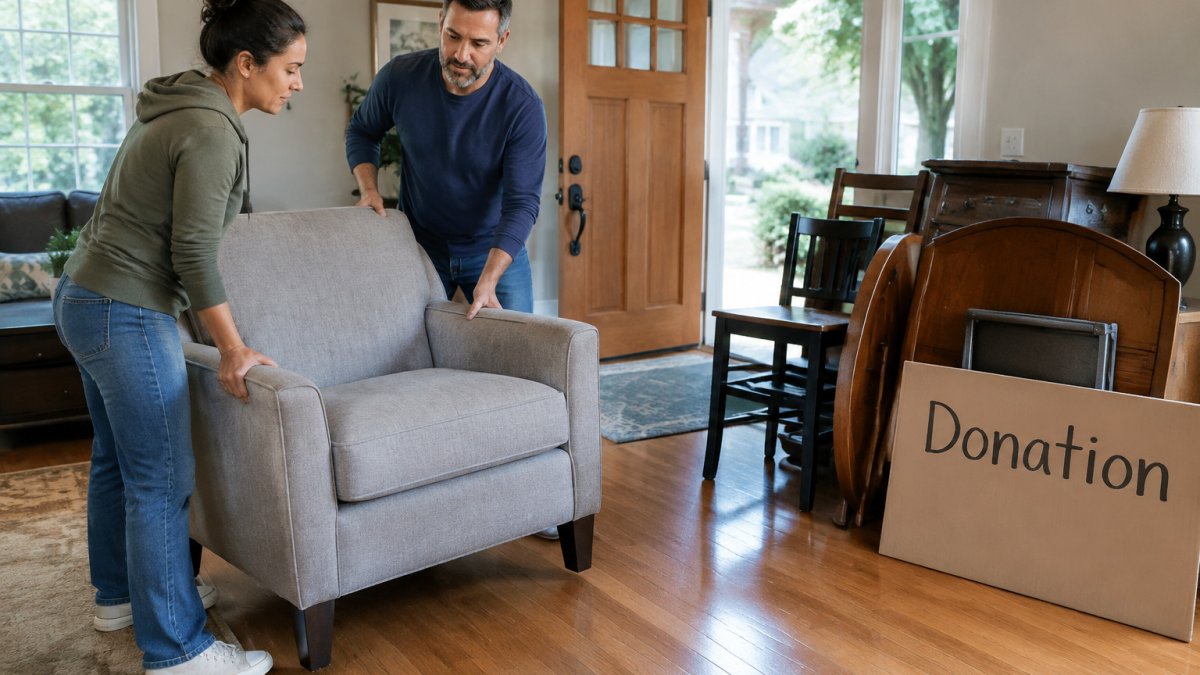
Start with three piles: keep, donate, and sell or discard. Once donation candidates are set aside, sort them by destination. A charity that offers free pickup should get the furniture it can accept, while items it refuses can go to a different outlet.
Plan the timing around the estate timeline. Coordinate pickup dates with the executor, and confirm that the home will be accessible on the scheduled day. Estate cleanouts often run into delays, so build in a buffer.
WTS Solutions works with families in this situation and can coordinate the sorting and move-out steps alongside the donation schedule. For a fuller walkthrough, see Hiring Estate Cleanout Services: A Step-by-Step Guide and How to Organize an Estate Inventory List Step by Step.
Preparing Estate Furniture for Pickup
Preparation saves time on pickup day. Drivers and donation staff work faster when items are clean, accessible, and clearly marked.
Before pickup, do the following:
- Clean each piece and remove personal items from drawers and cabinets
- Take photos of each item for your records and any tax documentation
- Disassemble large pieces only if the charity asks you to
- Move items to the front of the home, away from stairs where possible
- Keep hardware, cushions, and keys in labeled bags
Good preparation also protects the estate's value. A well-maintained dresser or table is easier to accept and easier to value later.
Tax Deductions and Valuation for Donated Estate Furniture
For an executor, furniture donation is both a cleanout tool and a tax document. The deduction may be claimed by the estate or by a beneficiary, and the paperwork should be kept carefully for later review. Treat valuation as a documentation project, not an afterthought.
Who claims the deduction
When furniture is donated from an estate, the deduction is generally claimed by the estate on its fiduciary income tax return or by the beneficiary, depending on how the estate is administered and who bears the cost of the donation. The executor should confirm the treatment with the estate's tax preparer before promising a deduction to heirs.
Fair market value for used furniture
Fair market value is the price a willing buyer would pay a willing seller, neither under pressure, with both having reasonable knowledge of the facts. For used household furniture, that is typically a fraction of original retail, and higher only for quality brands, complete sets, or pieces in exceptional condition. Do not use replacement cost or original purchase price.
A defensible valuation file for each item includes:
- A description with dimensions, material, brand if visible, and age if known
- A condition grade using the same floor-ready / repairable / dispose tiers the charity uses
- Comparable sale evidence, recent resale listings, auction results, or a written valuation from a qualified appraiser
- Photos showing the piece and its condition before pickup
- The charity's written receipt
Receipts and the written acknowledgment rules
Charities generally provide a written acknowledgment for noncash contributions (Charitable contributions: Written acknowledgments). Ask the charity for a receipt that includes the organization's name, the date and location of the donation, and a description of the items. If the charity provides a blank receipt, fill in the description yourself and keep a copy.
For contributions of property, additional rules may apply. The estate's tax preparer should confirm the current requirements, including any appraisal and reporting forms, each filing year.
Estate-specific valuation issues executors should watch
- Basis and step-up: Inherited property generally receives a stepped-up basis, which affects the deduction calculation. The executor should not assume the decedent's original cost is relevant.
- Bulk versus itemized: A whole-house donation is valued piece by piece, not as a single lot. A room full of average furniture can be worth far less than the sum of its original prices.
- Timing: The donation date drives the tax year. Schedule pickups before the estate's filing deadline, and keep the receipt dated the day the charity takes possession.
- High-value pieces: Art, antiques, and designer furniture may require a qualified appraisal and may be subject to different rules than ordinary household goods. Do not bundle them into a general furniture donation without advice.
- State treatment: State tax rules can differ from federal rules. Confirm with a tax professional licensed in the estate's jurisdiction.
Watch out: a receipt with a dollar value written by a charity volunteer is not a substitute for a qualified appraisal.
What to Do With Furniture Charities Will Not Take
Some furniture will not pass donation standards, and that is normal. Plan for these items early so they do not stall the cleanout.
Options include:
- Estate sale companies: Useful for higher-value pieces and bulk liquidation
- Local resale shops: May accept items that a charity refuses
- Municipal bulk pickup: Check local rules for furniture disposal
- Recycling centers: Some accept wood, metal, and appliances separately
Items that cannot be donated or sold should be disposed of responsibly. Check with the local waste authority before placing large items at the curb.
Booking Help With Your Parent's Estate Cleanout
Clearing a parent's home while handling probate and grief is a heavy load. You do not have to manage every step yourself. WTS Solutions provides compassionate, hands-on support for families in Vancouver, Washington, including coordination of move-outs, estate sale partnerships, and move management with dedicated crews.
To see how the process works, explore our support for families handling an estate or read more on the WTS Solutions Insights page. When you are ready, connect with WTS Solutions to talk through your parent's estate and the furniture donation plan.
Frequently Asked Questions
What is the best charity to donate furniture to?
The best choice depends on your location and the condition of the pieces. Habitat for Humanity ReStores accept new and gently used furniture, appliances, and building materials, and each local store sets its own rules. Other local charities may also accept furniture, and acceptance varies by location. Call the local location before you schedule anything, since acceptance and pickup terms are set locally.
Which charities offer free furniture pickup?
Pickup availability and terms vary by charity and location, and each local store sets its own donation arrangements. Confirm whether your address falls within a pickup area before you plan a move-out date, because coverage is limited and can change.
Which items are usually rejected for donation?
Charities may decline furniture that is damaged, stained, or outdated, since acceptance depends on condition. Acceptance is set by each organization and location, so a piece that one store turns down may be accepted elsewhere. When in doubt, send photos to the local charity before pickup to avoid a rejected load.
Can I claim a tax deduction for donated estate furniture?
Donations of household goods to a qualified charity may be deductible. Keep a receipt from the charity and record a written inventory of what was donated. Estate executors should review the rules on noncash charitable gifts with a qualified tax professional, since reporting requirements and deduction limits depend on the estate's circumstances. WTS Solutions can help coordinate documentation, but tax advice should come from a licensed professional.
Connect with WTS Solutions to start planning your parent's estate cleanout with care and clear next steps.