 how-to
How Do You Distribute Personal Property Fairly?
Last Updated: October 25, 2026
Quick Summary
To distribute personal property fairly, document every item in a written inventory with photos and values before anything is handed out, then follow the will, trust, or personal property memorandum first. For what remains, choose a written method such as a draft, sealed bids with points, sale and split proceeds, or equalization payments, and get every heir to sign off before you begin.
- Build a personal property inventory with a photo, description, and value for each item before distributing anything.
- Specific bequests in the will or trust come first, followed by a valid personal property memorandum.
- In a snake draft, round two runs in reverse so the last picker goes first, cancelling most first-pick advantage.
- Pull items appraised above an agreed threshold, often $500, out of the draft and handle them by equalization or sale.
- Set a response deadline in the written process and state that silence counts as agreement to the proposed resolution.
Table of Contents
- Why Dividing Personal Property Is Harder Than It Looks
- Build a Personal Property Inventory for an Estate
- Follow the Will, Trust, or Personal Property Memorandum First
- Estate Personal Property Distribution Methods That Work
- How to Divide Estate Belongings Among Siblings Without a Fight
- How to Handle Sentimental Items After a Death
- When Heirs Disagree: Dispute Prevention and Escalation
- Connect With WTS Solutions to Coordinate the Distribution
- Frequently Asked Questions
Why Dividing Personal Property Is Harder Than It Looks
Dividing a parent's belongings is rarely about the stuff. It's about memory, grief, and old family dynamics.
The law doesn't help much. A will can say "divide equally," but equal value and equal meaning are different things.
The biggest mistake we see is handing out items before anyone has written down what exists.
So how do you distribute personal property fairly?
Build a Personal Property Inventory for an Estate
A personal property inventory is a written record of every item in the estate, with a photo, description, and value for each. It's the foundation for every fair distribution.
Here's how to build one:
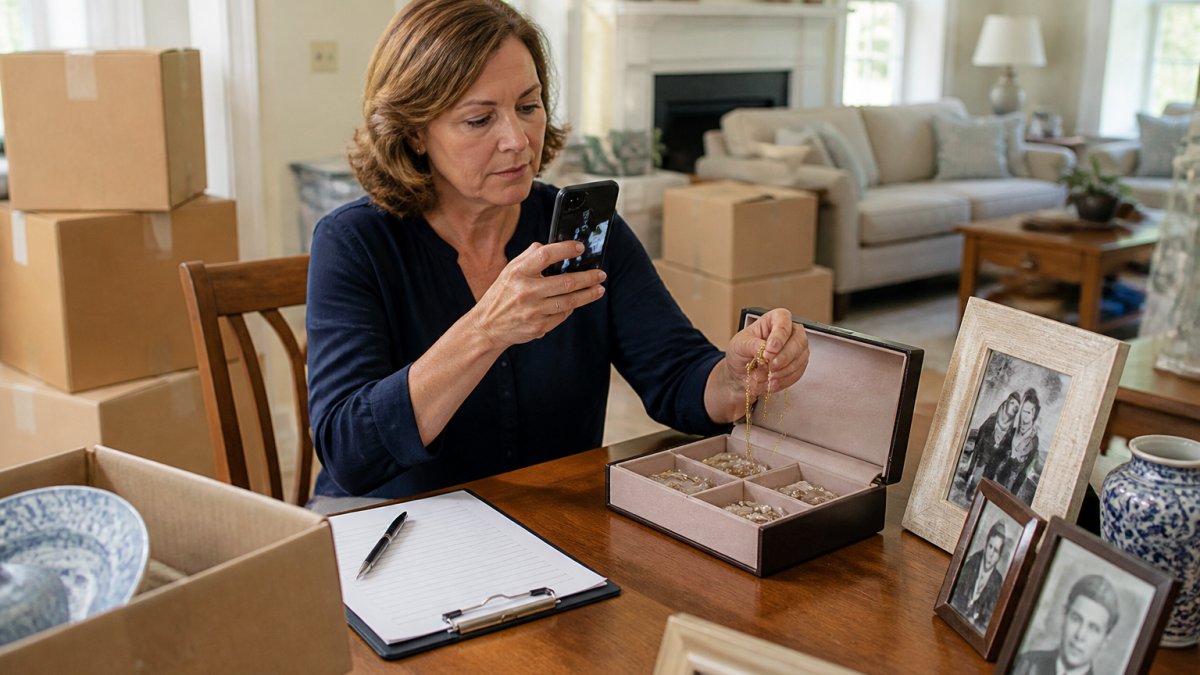
- Walk room by room with a phone camera and a notebook
- Photograph each item and note its condition
- Group small items by category, such as kitchenware or linens
- Flag anything that looks valuable for a professional appraisal
- Record who gave each item to the deceased, if you know
For items with unclear value, an appraisal gives you a fair market value you can defend. Our guide on how to value personal property for estate distribution explains the options.
Expect this to take a full weekend for a typical house. It's worth it: a solid inventory prevents most disputes before they start.
Follow the Will, Trust, or Personal Property Memorandum First
Written instructions come first. If the will names a specific bequest, that item goes to that person. No vote, no discussion.
A personal property memorandum is a separate signed list that names who gets which tangible items. The American Bar Association's estate planning resources explain how these documents fit into a broader estate plan.
Your order of priority:
- Specific bequests in the will or trust
- A valid personal property memorandum
- Lifetime gifts already made, which usually stay with the recipient
If the documents are silent or unclear, a process is needed. Here's what most families get wrong: they treat the leftover items as the whole estate.
Estate Personal Property Distribution Methods That Work
Once you know what's left, pick a method and write it down.
1. The draft system (rotating picks). Heirs take turns picking one item each.
- How to run it: Draw numbers from a hat for round one (1-2-3-4); round two runs in reverse (4-3-2-1, a snake draft), so the last picker goes first. This cancels most of the first-pick advantage.
- Worked example: Three siblings, 30 items. Round one: A, B, C. Round two: C, B, A. Round three: A, B, C. Each sibling ends with 10 items.
- Watch out for: high-value items disappearing in round one. Pull anything appraised above an agreed threshold (many families use $500) out of the draft and handle it through equalization or sale first.
2. Sealed bids with points. Each heir gets a set number of points to "spend" on items they want most.
- How to run it: Give every heir the same budget, 100 points is common. Each submits a sealed list assigning points to items (for example, 40 on Mom's ring, 10 on the toolbox). Highest bid wins each item; ties go to the person with the fewest points spent so far, or to a pre-agreed coin flip.
- Worked example: Two siblings bid on a watch. A bids 30 points; B bids 25. A gets the watch with 70 points left; B now has a 100-to-70 advantage on the remaining items, the built-in equalizer.
- Watch out for: point totals need unanimous agreement before bidding starts, and the item list must be final. Adding items mid-bid invalidates everyone's strategy.
3. Sale and split proceeds. Valuable items get sold and the cash divided equally.
- How to run it: Get two appraisals for anything worth more than a few hundred dollars, then choose a sale channel, estate sale company, consignment, or online marketplace. Deduct sale costs (estate sale commissions commonly run 25% to 40%, plus cleaning or hauling) before splitting.
- Worked example: A dining set appraises at $2,000 and sells for $1,800. The estate sale company takes 30% ($540), leaving $1,260. Split three ways, that is $420 per heir.
- Watch out for: sale costs reduce the total, and an item selling below expectations can feel like a loss to heirs who had already mentally spent the money.
4. Equalization payments. One heir keeps a high-value item and pays the others the difference in cash.
- How to run it: Appraise the item, divide the value by the number of heirs sharing in it, and the heir who keeps it pays each of the others that share.
- Worked example: A ring appraises at $9,000 and three siblings share the estate. Each share is $3,000. The sibling who keeps the ring pays the other two $3,000 each, $6,000 total, and the ring is fully accounted for.
- Watch out for: cash flow. The heir keeping the item needs the money on hand, and the payment should be documented in writing with a date. If the keeper cannot pay, the item usually goes back into the pool for sale.
| Method | Best For | Watch Out For |
|---|---|---|
| Draft system | Large families, many small items | First pick advantage, use a snake order |
| Sealed bids with points | Mixed tastes, sentimental items | Point totals need agreement before bidding |
| Sale and split proceeds | Valuable items, low attachment | Sale costs reduce the total |
| Equalization payments | One high-value item, few heirs | Cash flow for the buyer |
A note on remote and blended families. If an heir lives out of state, the same methods work with a virtual layer: photograph and measure every item, post the inventory to a shared folder, and run the draft or point bid by video call with a neutral host. Get shipping quotes before the pick so the remote heir can weigh a $40 box against $400 freight for furniture. In stepfamilies, confirm who counts as an heir under the will first; a surviving spouse, stepchildren, and biological children may have different legal claims, and the distribution method cannot override the document.
How to Divide Estate Belongings Among Siblings Without a Fight
Fairness isn't sameness. That single idea prevents most sibling fights. One sibling may want Mom's recipe box; another wants the truck.
But "be fair" is not a process. For help managing conflict specifically during the liquidation and division process, see managing family conflict during property liquidation.
Step 1: Separate sentiment from money. Before anyone claims anything, have each heir submit two private lists: items with emotional weight, and items they believe are financially valuable. Don't share them until all are in. This surfaces real priorities early and stops one sibling from claiming an item just because another wanted it.
Step 3: Agree on the process before the items. Decide the method (draft, points, sale, or equalization), the timeline, and who breaks ties.
Step 4: Set deadlines with consequences. Open-ended distributions drag on for months and wear everyone down. A workable schedule:
- Wish lists due: 14 days after the inventory is shared
- Objections to the inventory due: 7 days after that
- Selection meeting: within 30 days of the inventory
State the consequence in advance: anything not claimed by the deadline goes into the sale pile.
Step 5: Document objections and escalate in order. When a disagreement happens, do not improvise. Follow the same path every time:
- Written objection to the executor. The heir states the item, the reason, and the outcome they want. The executor restates the agreed process and applies it. Put the response in writing.
- Neutral mediator. Many estate-planning attorneys offer short mediation sessions, and court-connected programs exist in most states. A mediator does not decide who is right; they help the family reach a signed agreement.
- Court ruling. This is a last resort. It is slow and expensive, and it damages relationships. Ask the court only when the document itself is unclear or an executor is acting outside the will.
Step 7: Use a neutral third party for the hard calls. A professional keeps the conversation on the items, not the history.
How to Handle Sentimental Items After a Death
Sentimental items cause more disputes than valuable ones. A cheap ceramic figurine can matter more than a car, and that's normal.
Try these approaches:
- Let heirs name their top three items first. This surfaces the real priorities early.
- Photograph and share. If two people want the same photo album, scan it and give both a copy.
- Rotate keepsakes. Some families pass a meaningful item between households on a schedule.
For deeper guidance on deciding what to keep, donate, or let go, read what to do with sentimental items after a loss. It walks through the emotional side, which is often the harder half.
When Heirs Disagree: Dispute Prevention and Escalation
Prevention comes down to three habits: document everything, communicate in writing, and agree on the process before you need it.
When a disagreement does happen, escalate in order:
- Talk it out with the executor present. Restate the agreed process and apply it.
- Bring in a neutral mediator. Many estate-planning attorneys offer this as a short, low-cost service.
- Ask the court to rule. This is a last resort. It's slow and expensive, and it damages relationships.
Connect With WTS Solutions to Coordinate the Distribution
The hardest part of distributing personal property isn't the paperwork. It's the physical work: sorting, hauling, the estate sale, the move-out. That's what we handle.
WTS Solutions bridges the gap between grieving families and the professionals who do this work every day. Our team provides:
- Hands-on coordination for move-outs from homes and care facilities
- Partnerships with estate sale companies for efficient asset liquidation
- Comprehensive move management with dedicated crews
One grateful family put it this way: "Their compassionate approach and efficient handling of estate transitions made all the difference."
If you're ready for help coordinating the distribution, contact us to talk through your situation.
Frequently Asked Questions
What is the best way to divide estate belongings among siblings?
Start with a complete inventory, then use a structured selection process such as taking turns or a sealed-bid draft. Give each sibling an equal number of turns and let the oldest or the executor choose first only if everyone agrees to it in advance. Items with clear market value should be appraised so the pool stays balanced. Document every pick in writing and have each sibling sign off. A neutral third party, such as an estate coordinator, can run the draft and keep the process calm when emotions run high.
How should an estate value household items before distributing them?
Separate items into two groups: those worth appraising and those that are not. Jewelry, artwork, collections, and furniture with known maker marks should go to a licensed appraiser for a fair market value figure. Everyday household goods can be valued through an estate sale company's walkthrough or a documented comparable-sales estimate. Record every value on your personal property inventory so equalization payments can be calculated. Do not guess at values for high-ticket items; a written appraisal protects the executor and prevents later disputes.
Can an executor sell personal property instead of dividing it among heirs?
Yes, in many cases. If the will gives the executor discretion, or if heirs agree in writing, the executor can sell personal property and divide the proceeds equally. This is often the cleanest path when items are hard to split, when no heir wants them, or when the estate needs cash to pay debts. Check the will and your state's probate rules first, because some assets pass outside probate and some heirs have specific bequest rights. Document the sale price and keep receipts for the estate accounting.
What happens to personal property that no heir wants?
Offer unwanted items to extended family, then donate them to a qualified charity and keep the receipt for the estate's tax records. Items with resale value can go through an estate sale or online auction, with proceeds added to the estate. Anything left after that can be discarded or recycled. Before donating, confirm the executor has authority to dispose of the item under the will or state probate rules. A written record of what was donated, sold, or discarded keeps the estate accounting clean.
Dividing a loved one's belongings fairly takes a clear process, honest documentation, and a little patience. WTS Solutions can carry the physical and logistical load so your family can focus on each other. Get started with WTS Solutions and move through this transition with less stress and a fairer outcome.