 How-to
Distributing Sentimental Items After a Death, Step by Step
Quick Summary
Distribute sentimental items after a death by pausing removals, inventorying every room with photos, and letting heirs choose in an agreed order with written tie-breaking rules. Give the household time before anyone takes things, and record final decisions in writing so the division feels fair and clear.
- Small items often carry the strongest emotional weight, so plan for them early.
- Give the household a set window before anyone starts removing belongings.
- Complete a room-by-room inventory with photos and a column for who requested each item.
- Have heirs take turns choosing one item at a time, keeping a running list.
- Decide tie-breaking rules before the first choice and confirm them in writing.
Table of Contents
Why Sentimental Items Are the Hardest Part of an Estate
Sentimental items are often the hardest part of settling an estate. Read this same-topic article, how to handle sentimental items in an inheritance, for more depth on the subject. A house, an account, or a car can be valued and divided. A grandmother's quilt or a father's watch cannot be split down the middle without losing what made it matter. Families in Vancouver, Washington, and across the country regularly find that disputes over small personal items cause more lasting hurt than disputes over money. WTS Solutions works with adult children, executors, and families who are facing this exact problem, and the first step is to understand why it feels so heavy.
Estate planners have noticed the same pattern. A March 2026 report from Sessa Dorsey estate planning article on distributing sentimental items notes that even small personal belongings can trigger major estate disputes. The lesson is simple: a plan for the things with meaning belongs in the estate plan, not after it.
Many families also hit what one 2026 commentary calls "estate planning limbo." Personal items pile up over a lifetime, and if nobody addresses them directly, they sit unresolved until the transfer is already underway. You can read more about the legal side in Soto Law Group guidance on handling sentimental belongings.
- Small items often carry the strongest emotional weight
- Unclear wishes leave siblings guessing and competing
- Grief makes quick decisions harder to make fairly
Keep one idea in mind as you read: your goal is not to be perfect. Your goal is to be fair, clear, and documented.
Give Yourself Time Before Making Decisions
Waiting feels wrong when a parent has just died, but rushing is the bigger risk. For guidance on what to do with sentimental items after a loss, see what to do with sentimental items after a loss. Many families sell or give away belongings in the first few weeks, then regret it when a sibling asks where the rings went. Give the household a set window before anyone starts removing things.
Use that time to:
- Secure the house and valuables
- Locate the will, deed, and account statements
- Let each family member visit and take a few items they want to keep for now
- Agree in writing on who has the final say
Grief affects memory, judgment, and patience. A short pause protects relationships and gives everyone time to think clearly.
Build a Complete Inventory of Personal Property
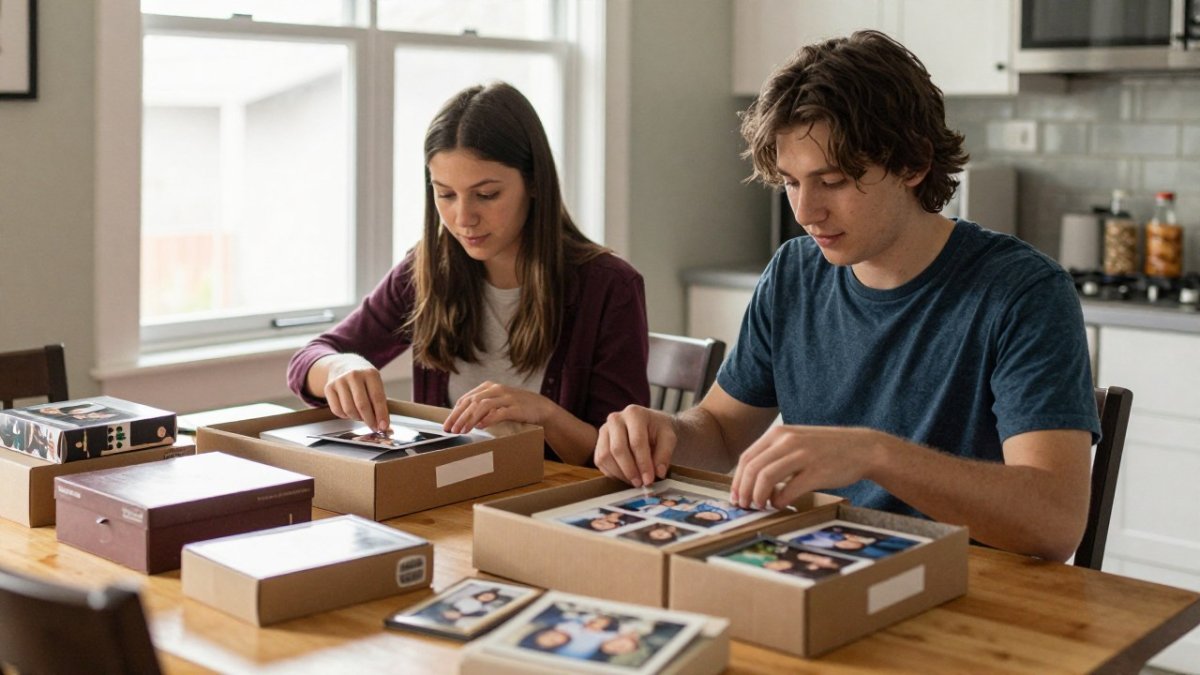
An inventory is the single most useful tool for dividing personal property. Walk through each room, closet, garage, and storage unit. List each item, note its condition, and take a photo. Group similar things together, such as jewelry, tools, kitchenware, and photo albums.
Your inventory should include:
- A short description and approximate age of each item
- Notes on any appraisal or documented value
- Which family members have expressed interest
- Photos for anything that is hard to describe
A printed inventory with a column for "requested by" makes the next step much easier.
How to Divide Estate Items Fairly Among Siblings
Fair does not always mean equal. A set of dishes may be worth less than a single ring, yet one sibling may want the dishes for sentimental reasons. The most reliable approach is to focus on the items that matter most to each person, then balance the overall total.
Start with a simple method:
- Each sibling ranks the items they want most.
- Take turns choosing one item at a time.
- Keep a running list so everyone can see the balance.
- Set aside contested items for a later round.
A clear process tends to reduce arguments, because the rules are known before anyone chooses.
A Tie-Breaking Process for Contested Items
Some items will be wanted by more than one person. Decide the tie-breaker before the first item is chosen, not during the argument. Common options include:
- A coin toss or random draw for low-value items
- Rotating first choice across rounds
- Taking turns with a pre-agreed trade
- Bringing in a neutral third party, such as a mediator
Write the rule down and have everyone sign or confirm it by email. This is one of the few steps that prevents long-running family conflict.
Distributing Personal Property Without a Will
When there is no will, state law decides who inherits, and personal property usually passes under the intestacy rules for the state, which for Washington residents are set out in the Revised Code of Washington. Under those rules, a surviving spouse and children typically share the estate, and the court or a personal representative handles the division. Families often need a formal process here, which is one reason to contact a professional early. You can review the statutory framework through the Washington State Legislature Revised Code of Washington.
Even without a will, a family can still agree on a fair division. Everyone who would inherit should sign a written agreement, and the personal representative should confirm that the agreement meets legal requirements before items are distributed.
Estate Distribution Checklist for Siblings
Use this checklist to keep the process organized:
- Confirm who has legal authority over the estate
- Pause all removals for an agreed period
- Complete a room-by-room inventory with photos
- Mark items each person wants to keep
- Agree on the order of choices and tie-breaking rules
- Record every final decision in writing
- Decide what to donate, sell, or dispose of
- Share final lists with all heirs
Handling Remote Family Decisions, Valuables, and Private Belongings
Not every family member can be in the room. Video calls work well for walking through an inventory, and shared spreadsheets let remote heirs mark their choices. Send photos ahead of the call so everyone can see the same item at the same time.
Valuables such as jewelry, coins, and important documents need extra care. Record their condition and consider a professional appraisal before dividing them. Private items, including personal letters or medical records, should be sealed and shared only with the people who need them.
WTS Solutions can help coordinate the logistics of remote decisions and the handling of belongings during the transition. For a family dealing with a difficult, drawn-out process, a neutral coordinator can help.
Booking Help With Your Parent's Belongings in Vancouver
If you are overwhelmed, you do not have to manage every step alone. Browse our Insights for more practical guidance, or read about how you don't have to face this alone when you hire support for a parent's belongings. When you are ready to talk through your situation, contact us and our team will help you plan the next step.
Frequently Asked Questions
How do you divide personal belongings after death?
Start by taking a complete inventory of personal property, then sort items into groups: keep, give away, sell, or donate. Many families begin with the items someone has already asked for, then move to contested pieces. Using a shared decision sheet, where each heir ranks their top choices, reduces arguments. Items with clear monetary value may need an appraisal to ensure a fair split. Document every decision in writing so the process stays transparent and any later questions can be answered.
Can you distribute personal property without a will?
Yes, but the process usually follows state intestacy rules rather than your parent's wishes. Depending on the estate, a court-supervised process may be needed to transfer assets, and the court determines who inherits. Families often reach a written agreement among heirs, but every adult heir should sign it. Consulting a Washington probate attorney before distributing items is wise, especially for valuable property or when heirs disagree.
How do you manage family disagreements over sentimental items?
Separate emotional items from financial ones and handle them in different rounds. Give each person a chance to name items that matter most to them, then look for overlaps. For contested pieces, consider rotating choices, shared access such as photographing items for family members, or a neutral third party to mediate. Pausing for a few weeks often lowers tension. If conflict continues, a mediator or estate attorney can help.
What should you do with sentimental items that have little monetary value?
Items with high sentimental value but low market value often carry the most emotion. Ask family members to nominate the pieces they want, photograph items others would like a copy of, and consider creating a memory box for shared items. Remaining household goods can go to a donation center or be sold through an estate sale. Visit the WTS Solutions website for current service details and a quote.
Connect with WTS Solutions to ease the burden on your family, protect what matters most, and move forward with confidence.