 How-to
How to Find Reputable Junk Removal Services
Last Updated: November 4, 2026
Quick Summary
To find reputable junk removal services, verify the provider’s identity, applicable local credentials, insurance, and review patterns, then compare written estimates for the same job scope. Confirm accepted items, disposal practices, fees, and who is responsible for the crew, and get all terms in writing before authorizing removal.
- Check recent reviews across more than one platform for repeated, specific complaints.
- Request a current certificate of insurance and ask how claims are handled.
- Send each provider the same item list, access details, and photos or video.
- Require approval before a revised on-site price or added work begins.
- Mark belongings that must stay and review the approved removal list with the crew.
Table of Contents
- How to Find Reputable Junk Removal Services for an Estate
- How to Choose a Junk Removal Company: Check Credentials and Reviews
- Compare Junk Removal Estimate Details Before Booking
- Junk Removal Questions to Ask About Items, Fees, and Disposal
- When Estate Cleanout Services Fit Better Than Junk Hauling
- Use This Checklist to Choose a Provider and Protect Estate Items
- Connect with WTS Solutions to Coordinate an Estate Cleanout
- Frequently Asked Questions
How to Find Reputable Junk Removal Services for an Estate
A reputable junk removal service should provide a clear written estimate, explain what it accepts, and confirm how it handles disposal. At WTS Solutions, we help families coordinate estate transitions. Junk removal is the pickup, loading, hauling, and disposal of unwanted items. The distinction matters: hauling clears belongings, but it does not manage probate, sale decisions, or a move-out.
To find reputable junk removal services, match the job to the provider before comparing estimates. A few pieces of furniture may call for a local junk hauler; a whole home with items to sell or distribute may need estate cleanout services. The FTC’s guidance on hiring a contractor recommends checking references and getting written terms.
How to Choose a Junk Removal Company: Check Credentials and Reviews
Choose a junk removal company by checking its service area, identity, insurance, written terms, and review patterns before scheduling. A strong rating can help you build a shortlist, but it does not establish that a provider is insured, properly registered where required, or careful with belongings. Verify those points directly and keep the answers in writing.
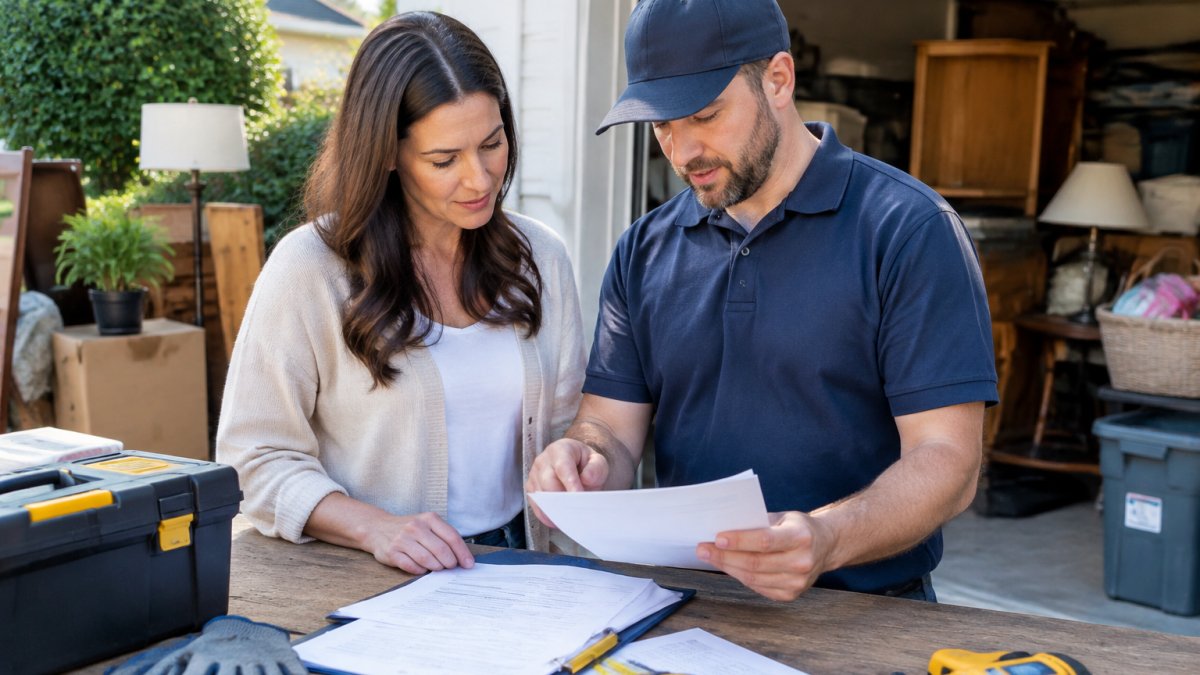
Use this vetting process:
- Confirm who you are hiring. Ask for the company’s legal or business name, a working phone number, and a written estimate or service agreement under that name. Check that the name on the paperwork matches the business you contacted, rather than relying only on a social-media profile or a third-party listing.
- Check local requirements. Licensing and registration rules can vary by state and locality and may depend on the work performed. Ask which requirements apply to the service at your address, then verify them with the relevant state or local government office. Do not assume that a general business registration is the same as a trade license.
- Request proof of insurance. Ask whether the company carries general liability coverage for property damage and what coverage applies if a worker is injured. Request a current certificate of insurance and, for a larger job, ask the insurer or agent to confirm that the policy is active. A certificate is evidence of reported coverage, not a guarantee that every loss or circumstance is covered; ask the provider how claims are handled.
- Ask who will do the work. Find out whether the crew consists of company employees or subcontractors, who supervises the job, and whether workers are covered by workers’ compensation where required. Ask who is responsible if a subcontractor damages the property or is injured. The company should be able to explain its arrangement clearly.
- Check reviews for patterns. Read recent reviews across more than one platform. Look for repeated, specific reports about surprise charges, missed appointments, damage, or unresolved complaints, not just the overall star rating. Ask for references from customers with a similar residential or property cleanout if the job is substantial.
- Get the scope and protections in writing. Confirm the items to be removed, exclusions, price conditions, arrival window, payment terms, cancellation policy, and process for reporting damage. For an estate, identify who has authority to approve removal and make sure the crew receives the approved list.
- Ask where items go. Find out whether usable goods may be donated, recyclable materials are separated, and remaining waste goes to an appropriate disposal facility. Ask what the company can document and what happens when a donation or recycling option is unavailable. Do not assume every item can be reused or recycled.
A useful call or email script is: “Do you serve this address, and what licenses or registrations apply to this job? Can you provide current proof of insurance and explain who employs or supervises the crew? What does your estimate include, what could change the price, and how do you handle donations, recycling, and disposal? Please send the answers and service terms in writing.” Asking each provider the same questions makes their responses easier to compare.
Watch out: Be cautious if a provider will not identify the business, explain its insurance, put the scope and price terms in writing, or let you approve a revised price before work starts. Pressure to pay immediately or a quote that changes sharply after arrival deserves clarification before you authorize the job.
For guidance on qualifications, read our legal requirements for estate liquidators. The FTC’s guidance on hiring a contractor recommends checking references and getting written terms, and its advice on avoiding home-improvement scams offers additional precautions.
Compare Junk Removal Estimate Details Before Booking
Compare written estimates against the same item list and job conditions, not just the headline total. Junk removal quotes may be based on the space items occupy in a truck, a per-item charge, or a job-specific price. Ask each provider to explain its pricing method and what could change the amount after the crew arrives.
Before requesting estimates, prepare a consistent description of the job:
- List the items to remove, including approximate quantities and sizes. Note heavy or awkward pieces, such as a sectional sofa, a refrigerator, or a pile of renovation debris.
- Describe access: floor level, stairs, elevator availability, distance from the items to the truck, and any narrow doorways or parking restrictions.
- Send the same photos or video to each provider, and identify anything that must stay.
- Ask for the estimate in writing and confirm whether it is binding, conditional, or subject to an on-site reassessment.
Use this checklist to compare the terms, not just the total:
| Quote detail | What to confirm | Why it matters |
|---|---|---|
| Minimum charge | Is there a minimum pickup fee, even for a small load? | A small job may cost more per item than expected. |
| Pricing basis | Is the price based on truck space, item count, labor, or a flat job rate? | Different methods make headline quotes hard to compare. |
| Included work | Does the quote include lifting, loading, hauling, and disposal? | “Removal” may not cover every task you expect. |
| Access and labor | Can stairs, long carries, disassembly, or difficult access add charges? | The crew may revise a quote if access differs from what was described. |
| Limits | Are there weight, volume, or item-count limits? | An overloaded or larger-than-described job may require a different price. |
| Disposal and special handling | Are disposal charges or handling for particular items included? | Some materials may require separate arrangements or fees. |
| Changes and cancellation | What happens if you add items, the crew cannot complete the job, or you cancel? | Written terms help prevent disputes about changes or missed appointments. |
Ask the provider to write down the estimated total, what it covers, and the specific conditions that could change it. If the company cannot give a firm price until it sees the load, ask how the on-site price will be calculated and require approval before work begins. Compare the revised price with your other estimates before authorizing removal; you do not have to proceed simply because a crew has arrived. If the load is part of a move, compare the cost and scope of moving and removal services before deciding whether to hire separate providers.
Watch out: A low estimate is not comparable if it excludes loading, disposal, or access charges that another provider has included. Ask for an itemized explanation rather than assuming the difference reflects a better deal.
For broader estate work, hauling may be only one part of the cost. See our guide to the cost of estate liquidation services. Exact pricing depends on the job, so request current written estimates using the same scope and access details.
Junk Removal Questions to Ask About Items, Fees, and Disposal
Ask what the company accepts, what it excludes, and where reusable items go before authorizing removal. Junk removal questions to ask should cover furniture removal, appliance removal, construction debris, electronics, donation, recycling, and disposal. Policies vary, so get answers for the actual items at the property.
Useful questions include:
- Do you remove the specific furniture, appliances, or debris listed?
- Are hazardous or specialty items excluded?
- Does the quote include loading and disposal?
- Can usable belongings be donated or recycled?
- What happens if the crew finds additional items?
What happens to unsold belongings? Their next destination depends on condition, local options, and the agreements made with the estate sale provider. Read about options for unsold estate sale items before deciding what to haul away.
When Estate Cleanout Services Fit Better Than Junk Hauling
Estate cleanout services fit better when a family needs help coordinating belongings for sale, donation, relocation, or removal. Junk hauling is narrower: the crew removes agreed items, while the family or another professional typically manages decisions about what stays. The right choice depends on the work still left to do.
A common mistake is booking full-service removal before family members identify keepsakes and sale items. Mark approved items clearly, then ask the provider to confirm the scope before loading begins. If you are deciding between hauling and a coordinated cleanout, our estate cleanout hiring guide explains the difference. For support with the broader transition, explore professional estate clearing services.
Use This Checklist to Choose a Provider and Protect Estate Items
Use a written checklist to compare providers and prevent accidental removal of belongings the family wants to keep. The person coordinating the job should gather decisions from beneficiaries, identify restricted items, and share one approved removal list with the crew.
- Sort belongings into keep, sell, donate, and remove.
- Confirm family approval for disputed or valuable items.
- Photograph rooms and mark items excluded from removal.
- Verify service area, insurance, credentials, and review patterns.
- Compare written estimates with matching job details.
- Confirm accepted items, disposal plans, and extra fees.
- Review the final list with the crew before loading.
This is where a simple process protects both the estate and family relationships. In practice, a clearly marked “do not remove” area is more reliable than verbal instructions given during a busy pickup.
Connect with WTS Solutions to Coordinate an Estate Cleanout
WTS Solutions bridges families with specialized professionals and coordinates estate sales and move management, including move-outs from homes and facilities. Connect with WTS Solutions to discuss support with an estate transition.
Frequently Asked Questions
How do I choose a reputable junk removal company?
Check that the provider serves your area, confirms insurance, explains accepted items, and gives a written estimate before work begins. Read recent customer reviews for details about communication, arrival times, and how crews handled belongings. For an estate, mark items that must stay and confirm the crew understands the boundary before loading. Compare the full service terms, not just the initial quote.
What should a junk removal estimate include?
Ask for a written estimate that explains how the job is priced, what loading and hauling include, and whether disposal, stairs, heavy items, or extra trips can add fees. Confirm whether the amount can change after the crew arrives and what happens if the job scope differs from the description. The supplied research does not establish standard prices, so request a quote based on your items and service area.
What questions should I ask a junk removal service before hiring?
Ask whether the provider is insured, which items it accepts, how it handles electronics and construction debris, and where reusable or recyclable items go. Confirm the service area and whether the estimate covers every expected fee. For a property cleanout, ask how the crew will separate belongings designated for family, donation, sale, and removal.
How can I make sure valuable estate items are not removed by mistake?
Set aside documents, jewelry, photographs, and items the family wants to keep before the crew arrives. Label rooms or belongings clearly, and walk through the property with the provider to identify what can be loaded. Keep a written inventory of items intended for sale, donation, or removal, and ask the crew lead to confirm the instructions before work starts. Pause the job if ownership or family decisions remain unresolved.