 ultimate-guide
Senior Move Management Services: A Complete Guide
Table of Contents
- What Is Senior Move Management?
- Core Services: Packing, Unpacking, and Downsizing
- Cost of Senior Move Management: What to Expect
- Senior Relocation Checklist for Families
- Senior Downsizing Services and Estate Coordination
- How to Choose a Qualified Move Manager
- Why Professional Support Matters During Transitions
- Getting Started: Next Steps for Your Family
Last Updated: August 13, 2026
What Is Senior Move Management?
Senior move management is a specialized service that helps older adults and their families navigate the complex logistics of relocation, downsizing, and life transitions. It combines emotional support with practical coordination, managing everything from sorting through decades of belongings to arranging transport and unpacking in a new home.
What distinguishes professional move management from a standard moving company is scope. A typical mover handles transportation. A senior move manager handles the entire ecosystem: space planning, downsizing decisions, estate coordination, and the emotional labor of letting go. For families managing a parent's transition after a loss or health change, this difference is significant.
At WTS Solutions, we've seen firsthand how overwhelming this process becomes when families try to manage it alone. The physical demands are real, sorting through a lifetime of accumulated items and coordinating multiple vendors, but the emotional weight often exceeds the logistical burden.
Core Services: Packing, Unpacking, and Downsizing
Professional senior move management services typically include three core components that work together to create a complete transition experience.
Downsizing and space planning starts with assessing what fits in the new environment. A move manager evaluates the new home's square footage, layout, and storage capacity, then determines what items make sense to keep. This creates a functional, comfortable living space that matches the senior's actual needs. Many families find this stage emotionally challenging because it requires making permanent decisions about possessions tied to decades of memories.
Packing and unpacking services handle the physical labor and logistics. Professional crews pack items systematically, label boxes clearly, transport belongings safely, and unpack and arrange items in the new space. For seniors with mobility limitations or adult children managing from a distance, this eliminates the most physically demanding part of the move.
Estate coordination and disposition addresses what doesn't move forward. Items designated for donation, sale, or disposal require coordination with charitable organizations, estate sale companies, or waste management services. A move manager handles vendor relationships and logistics, ensuring nothing is simply abandoned.

Cost of Senior Move Management: What to Expect
Understanding the cost of senior move management requires recognizing that pricing varies significantly based on project scope, timeline, and local market factors. Most providers structure costs around the complexity of the downsizing, the volume of items, and the distance of relocation.
Many move managers charge hourly rates for consultation and planning phases, then transition to project-based pricing once the scope is clear. Initial consultations typically range from complimentary to a modest hourly fee depending on the provider.
The actual move coordination costs depend on several variables: the number of items being relocated, whether you're downsizing from a full house to an apartment, whether items require storage, and whether an estate sale is involved. A move from a 3,000-square-foot home to a senior living community will cost considerably more than a move within the same building.
WTS Solutions works with families to understand their specific needs before quoting a project. Rather than generic pricing, we develop a detailed estimate based on the actual work required, hours needed for sorting and planning, coordination with estate sale partners, moving crew time, and any specialized services.
Senior Relocation Checklist for Families
A structured approach to senior relocation prevents missed details and reduces stress during an already emotional time.
Planning phase (8-12 weeks before move):
- Assess the new living space: measure rooms, note storage, identify layout challenges
- Evaluate what furniture and items will fit realistically
- Discuss with the senior which possessions hold emotional significance
- Begin identifying items for donation, sale, or disposal
- Research and contact move management providers for initial consultation
- Confirm moving date with new facility or landlord
Preparation phase (4-6 weeks before move):
- Finalize move manager selection and sign service agreement
- Create a detailed inventory of items to move
- Schedule estate sale company if items will be sold
- Arrange donation pickups for unwanted items
- Notify utilities, insurance, and service providers of move date
- Update address with banks, healthcare providers, and government agencies
- Gather important documents and medications
Execution phase (1-2 weeks before and day of move):
- Confirm final logistics with move manager and movers
- Pack personal items the senior wants to control themselves
- Arrange for professional packing of remaining items
- Conduct final walkthrough of old residence
- Verify utilities are disconnected after move
- Confirm arrival and unpacking schedule at new location
Settlement phase (first 2-4 weeks after move):
- Unpack and arrange items in new space
- Set up utilities, internet, and services at new address
- Update address with remaining service providers
- Arrange for any needed home modifications or safety features
- Help senior establish routines in new environment
- Follow up on any items still in storage or pending disposition
Senior Downsizing Services and Estate Coordination
Downsizing represents the emotional and logistical core of most senior transitions. Professional downsizing services go beyond simply removing items; they create a thoughtful process that honors the senior's history while building a functional future space.
A qualified downsizing specialist begins by understanding the senior's priorities: What items bring comfort? What has sentimental value? What functional items are actually used daily? From this foundation, the specialist helps sort belongings into categories: items to move, items to sell, items to donate, and items to discard.
Estate coordination extends downsizing by managing the disposition of items not moving forward. For valuable items, furniture, artwork, collectibles, jewelry, an estate sale company can maximize return. The move manager coordinates timing so the estate sale occurs before the move, reducing the volume of items requiring other disposition.
Items not suitable for sale go to donation or disposal. Quality move managers maintain relationships with local charitable organizations that accept furniture and household goods, scheduling pickups to align with the move timeline. For families managing an estate after a parent's death, this coordination is invaluable, providing structure during grief and decision fatigue.
How to Choose a Qualified Move Manager
Selecting the right move manager requires evaluating both credentials and fit.
Start by verifying professional credentials. Look for move managers who hold certification from the National Association of Senior Move Managers (NASMM) or similar professional organizations. These certifications indicate formal training in senior transitions, estate coordination, and the unique challenges of working with older adults.
Ask about specific experience with situations similar to yours. A move manager experienced in estate transitions after death has different expertise than one primarily handling moves within senior living communities. Request references from families with comparable situations and ask specific questions about projects they've completed.
Evaluate communication style and emotional intelligence. During an initial consultation, notice whether the move manager listens more than they talk. Do they ask questions about the senior's preferences and concerns? Do they acknowledge the emotional dimensions of the transition? The best move managers balance practical efficiency with genuine empathy.
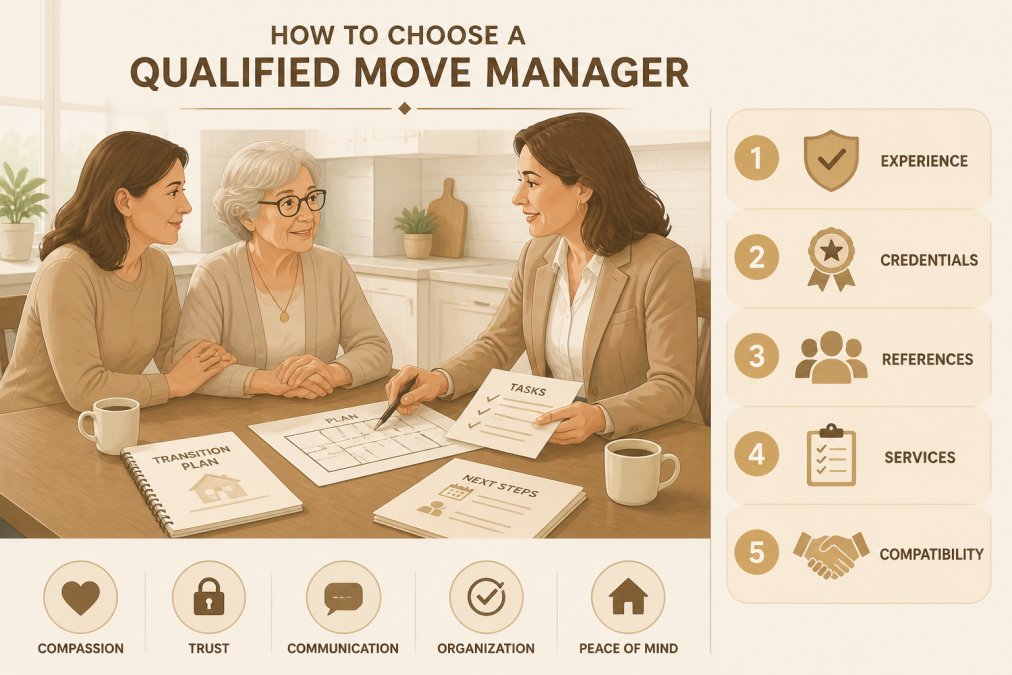
Clarify the scope of services and how they're priced. Understand what's included, what costs extra, and whether pricing is hourly, project-based, or a combination. A transparent provider explains their model clearly and provides a detailed estimate based on your specific needs.
Trust your instinct about fit. The move manager will be present during an emotionally vulnerable time. You need someone you feel comfortable with, someone who demonstrates competence and genuine care for your family's wellbeing.
Why Professional Support Matters During Transitions
The case for professional senior move management extends beyond convenience. Research consistently shows that supported transitions produce better outcomes for seniors' physical and mental health compared to rushed or poorly coordinated moves.
Transitions are inherently stressful. For seniors, the combination of relocation, downsizing, and often grieving a loss or adapting to health changes creates significant psychological burden. Seniors who experience supported, well-planned transitions adjust more quickly to new environments and maintain better mental health outcomes than those managing chaotic moves alone.
Professional coordination also reduces physical risk. Seniors attempting to pack, sort, and move heavy items face genuine injury risk. Professional crews handle the physical labor, eliminating these hazards. Additionally, move managers catch safety issues in new living spaces and coordinate modifications before the senior arrives.
From a family perspective, professional support preserves relationships during high-stress periods. Adult children managing a parent's move while grieving and working often experience burnout and conflict with siblings. A neutral professional coordinator reduces family tension by handling logistics and providing expert guidance.
WTS Solutions bridges the gap between families and the professionals needed to execute successful transitions. Our role combines move management expertise with deep understanding of estate coordination, probate processes, and the emotional dimensions of transition.
Getting Started: Next Steps for Your Family
Beginning a senior move management project starts with honest assessment of your situation and clear communication with your family.
Step 1: Evaluate your needs. Determine what aspects of the transition require professional support. Are you managing a complete estate downsizing? Coordinating a move to assisted living? Your specific challenges determine what type of expertise you need.
Step 2: Research qualified providers. Look for move managers with professional credentials, relevant experience, and strong references. Contact references directly and ask specific questions about their experience.
Step 3: Schedule consultations. Meet with at least two providers. A good initial consultation is free or low-cost and gives you a sense of their approach and whether they understand your specific situation.
Step 4: Discuss scope and timeline. Be clear about what you need, when you need it, and what your constraints are. A good move manager asks detailed questions and develops a realistic plan based on your actual situation.
Step 5: Establish clear communication. Once you've selected a provider, designate one primary family contact to prevent conflicting instructions. Discuss decision-making processes and who approves major decisions.
Step 6: Trust the process. Professional move management works best when families step back from day-to-day logistics and trust the coordinator to execute the plan. Your role is to support your loved one emotionally and make major decisions.
Navigating a senior's transition, whether after a loss, health change, or planned move to a new living situation, carries both logistical and emotional weight. Families often underestimate how complex these transitions become when managed alone. WTS Solutions specializes in removing that burden, coordinating every aspect of the move while providing compassionate guidance through probate, estate coordination, and asset transition. Our team handles the logistics so you can focus on supporting your loved one through this significant life change. Connect with WTS Solutions to discuss your specific situation and explore how professional move management can ease your family's transition.
Frequently Asked Questions
What exactly is included in senior move management services?
Senior move management typically includes space planning, downsizing consultation, packing and unpacking, coordinating donations or estate sales, and move day logistics. Providers also handle address changes, utility coordination, and setting up your new home. The scope depends on your situation, whether you're moving to assisted living, downsizing to a smaller home, or managing an estate transition. A qualified move manager assesses your needs and customizes the service package accordingly.
How much does senior move management cost?
Pricing varies based on the complexity of your move, the volume of belongings, and the services you need. Some providers charge hourly rates (typically $70-$160 per hour), while others quote project-based fees. Estate coordination and downsizing services may be priced separately from the actual move. Contact WTS Solutions or local providers for a free consultation and custom estimate tailored to your situation.
Is senior move management worth the cost?
Yes, for most families. Professional move managers reduce physical and emotional strain during an already difficult time. They handle logistics, coordinate with facilities, manage donations and estate sales, and maximize the value of your belongings. For families juggling work, caregiving, and grief, the peace of mind and time saved often justifies the investment. Even modest estates benefit from expert guidance on downsizing and relocation.
What should I look for when choosing a senior move manager?
Verify credentials, ask for local references, and confirm experience with transitions similar to yours (assisted living, estate sales, downsizing). Check BBB ratings and reviews. A good move manager listens to your family's concerns, explains the process clearly, and shows compassion during difficult decisions. Ask about their partnerships with estate sale companies and whether they handle probate coordination. Request a detailed, written estimate before committing.
This article was written using GrandRanker