 ultimate-guide
How to Sell a House After Death: A 2026 Guide
Table of Contents
- Understanding the Probate Property Sale Process
- Executor Responsibilities Selling House: Your Legal Role
- Step-by-Step: How to Sell a House After Death
- How to Clear Out a House After Death
- Capital Gains Tax on Inherited Property: What You Owe
- Managing Family Disputes and Emotional Stress
- Common Mistakes to Avoid When Selling an Inherited Home
- Conclusion: Start the Process With Confidence
- Frequently Asked Questions
Last Updated: September 7, 2026
Selling a home after a loved one passes is rarely a simple transaction; it is an administrative process layered over an emotional one. The probate property sale process involves court oversight, specific legal timelines, and financial obligations that many executors face for the first time. WTS Solutions guides families through this transition, and a common question is straightforward: how to sell a house after death without adding stress to an already difficult period.
The answer depends on several factors, including whether the deceased left a will, how the property is titled, and whether the estate must go through probate. This guide breaks down the executor responsibilities selling house, the steps involved, and the tax implications you need to understand before listing the property. Below, we'll show you exactly how to move from grief to a successful sale while protecting the estate's value.
Understanding the Probate Property Sale Process
Probate is the court-supervised legal process of validating a will, inventorying assets, and distributing property to heirs and beneficiaries. When a homeowner dies, their house does not automatically transfer to the next of kin; the estate must be settled first. Understanding this probate property sale process is the foundation for everything that follows.
The process begins when the court appoints an executor (if a will exists) or an administrator (if the person died intestate, meaning without a will). The court issues letters testamentary or letters of administration, which grant the legal authority to manage the estate. Until these documents are issued, no one has the legal standing to list the property or negotiate a sale.
A common misconception is that the house must be sold before probate closes. In many cases, the estate can sell the property during the probate period, provided the court approves the sale. The timeline varies by state, but expect the entire process to take several months to over a year. The American Bar Association's guide to probate basics notes that probate timelines depend heavily on local court schedules and the complexity of the estate.
Executor Responsibilities Selling House: Your Legal Role
The executor responsibilities selling house go far beyond placing a "For Sale" sign in the yard. As the fiduciary, you are legally obligated to act in the best interest of the estate and its beneficiaries. This duty means you must secure the property, maintain it, and ensure it sells for fair market value.
Your core duties include:
- Obtaining letters testamentary from the probate court
- Ordering a formal appraisal and title search
- Maintaining homeowner's insurance and paying property taxes during the waiting period
- Paying off the mortgage and any liens or encumbrances from estate funds
- Obtaining court approval before accepting an offer in many jurisdictions
Failure to fulfill these duties can result in personal liability. If you sell the property below market value without court approval, beneficiaries can challenge the sale. If you let the insurance lapse and the house burns down, you could be personally responsible for the loss.
The role requires meticulous record-keeping. Every expense, from a new water heater to the real estate commission, must be documented and accounted for in your final report to the court. This is where professional guidance becomes valuable. WTS Solutions coordinates with estate sale companies and move management crews, offering support in maintaining and preparing the property.
Step-by-Step: How to Sell a House After Death
The question of how to sell house after death becomes manageable when broken into clear phases. Here is the sequence most estates follow:
- Secure the property (Week 1): Change the locks, forward mail, and ensure the home is safe. Check that insurance is active.
- Obtain legal authority (Weeks 1-6): File the will with the probate court and petition for appointment as executor or administrator.
- Inventory the assets (Weeks 2-6): Conduct a full walkthrough, arrange for a formal appraisal, and order a title search to identify any liens, mortgages, or judgment of possession issues.
- Decide on sale timing (Weeks 4-8): You can sell before probate closes with court approval, or wait until the estate is fully settled. Selling during probate is common when the estate needs cash to pay debts or taxes.
- Prepare the home (Weeks 6-10): Clear out personal belongings, make necessary repairs, and stage the property.
- List and market (Weeks 8-12): Work with a real estate agent experienced in estate sales. Disclose the property is being sold through a probate estate.
- Obtain court approval (After offer accepted): Many courts require a confirmation hearing before the sale is final. The judge will review the offer to ensure it is fair.
- Close and distribute (Weeks 12-20): Pay off the mortgage, closing costs, and estate debts, then distribute the remaining proceeds to heirs.
The sale proceeds do not go directly to you. They are deposited into the estate account, used to settle debts, and then distributed according to the will or state succession laws. This process demands patience; rushing a sale to "get it over with" often results in a lower price or legal complications.
How to Clear Out a House After Death
Clearing a home is often the most emotionally draining step. Every item carries a memory, and deciding what to keep, donate, sell, or discard can paralyze a grieving family. Approach this task systematically, not emotionally.
Start by sorting belongings into categories: keepsakes, items for family members, valuables for appraisal, donations, and trash. Handle legal and financial documents first, as they are needed for the estate. Then move to obvious valuables like jewelry, art, and antiques, which may require a professional appraisal for estate tax purposes.
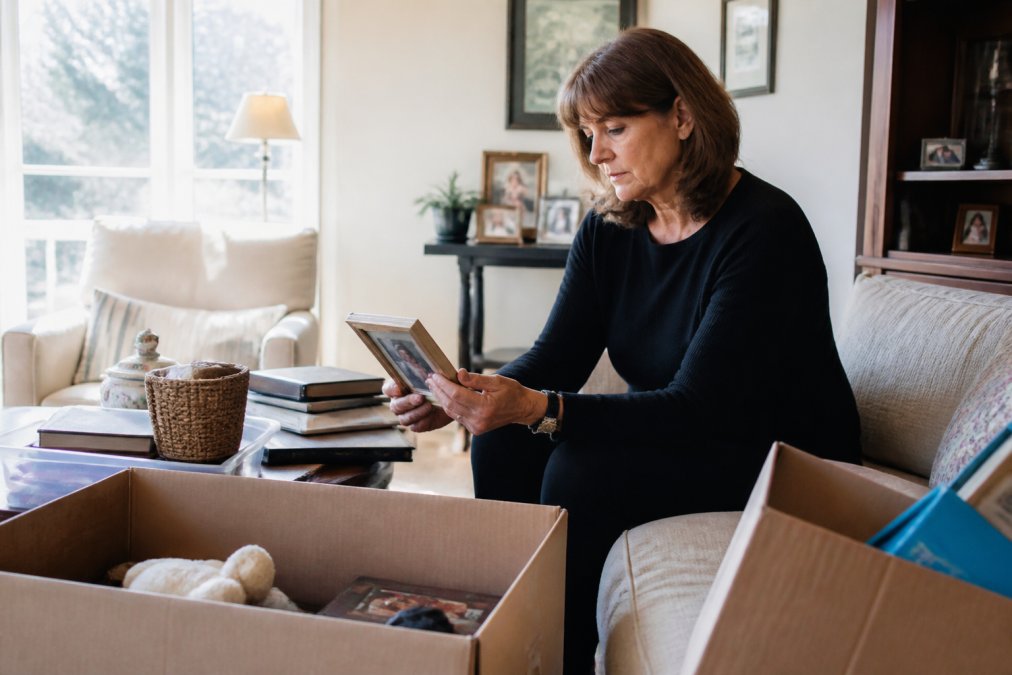
An estate sale is often the most efficient way to liquidate household contents. Professional estate sale companies handle pricing, advertising, and the sale itself, returning a portion of the proceeds to the estate. However, not every item is worth selling. Furniture that is worn or dated may fetch less than the cost of storing it. A common mistake is overvaluing belongings based on sentiment rather than market demand.
For items with no monetary value, schedule a donation pickup with a local charity and arrange for a junk removal service for the rest. This is where comprehensive move management services prove their worth. Dedicated crews can clear an entire home in a day or two, sorting items according to your instructions, which spares you the physical and emotional toll of doing it alone.
Capital Gains Tax on Inherited Property: What You Owe
The capital gains tax on inherited property is one of the most misunderstood aspects of selling an inherited home. The good news is that most heirs owe little or no tax, thanks to the stepped-up basis rule.
When you inherit property, its tax basis is not what the deceased originally paid. It is stepped up to the fair market value on the date of death. If you sell the home shortly after inheriting it, your gain is minimal because the sale price roughly equals the stepped-up basis. For example, if your parent bought the house for $50,000 but it was worth $300,000 when they died, your basis is $300,000. Selling it for $310,000 means you only owe tax on the $10,000 gain.
The IRS guidelines on inherited property and basis explain that this rule applies to most estate transfers. However, complications arise if the property value decreased after the date of death, or if you rent the property out before selling. If the home was a rental rather than a primary residence, you may also face depreciation recapture.
State taxes can differ, so consult a tax professional familiar with your jurisdiction. The capital gains tax on inherited property is federal, but some states impose their own inheritance or estate taxes. Proper planning here can save heirs thousands of dollars.
| Scenario | Your Tax Basis | Taxable Gain on Sale |
|---|---|---|
| Sold immediately after inheritance | Stepped-up value at date of death | Minimal or zero |
| Sold after living in it 2+ years | Stepped-up basis | May qualify for $250K exclusion |
| Rented out before selling | Stepped-up basis minus depreciation | Higher due to depreciation recapture |
Managing Family Disputes and Emotional Stress
The emotional weight of selling a family home often surfaces as conflict between siblings. One heir may want to keep the house in the family, while another needs their inheritance cash to buy a home of their own. These disputes can derail a sale and strain relationships permanently.
The most effective way to prevent conflict is transparency. Share the appraisal, the listing price, and every offer with all beneficiaries from the start. When siblings understand the financial reality, they are more likely to agree on a path forward. If one heir wants to buy out the others, a formal appraisal establishes a fair purchase price.
When disagreements escalate, consider mediation before litigation. A neutral third party can help the family reach a consensus without the cost and delay of a court battle. Probate courts can also resolve disputes, but that process is slow and expensive, and it benefits no one except the attorneys.
For the executor, the stress of managing both the estate and family dynamics is significant. Many find that delegating the logistical work helps. WTS Solutions acts as a bridge between grieving families and professionals, coordinating the estate sale and move-out so the executor can focus on family relationships rather than vendor management. A grateful family in Vancouver, Washington noted that WTS Solutions' compassionate approach and efficient handling of estate transitions made all the difference during their difficult time.
Common Mistakes to Avoid When Selling an Inherited Home
Several errors recur across estate sales, and avoiding them protects both the estate's value and your legal standing.
Selling without court authority. Listing the house before receiving letters testamentary is the most serious mistake. The contract is unenforceable, and you could be personally liable for damages.
Skipping the appraisal. An informal "estimate" from a real estate agent is not sufficient for probate. The court requires a formal appraisal to establish fair market value, and beneficiaries have the right to challenge an underpriced sale.
Ignoring maintenance costs. The mortgage, property taxes, insurance, and utilities do not pause during probate. Many estates underestimate these carrying costs, which can take months to cover. Budget for at least six months of expenses before the sale closes.
Failing to disclose the property is part of an estate. Buyers and their lenders need to know. Some mortgage products have restrictions on probate sales, and the title search may reveal issues that require court resolution before closing.
Overlooking the deed transfer requirements. A deed transfer after death requires specific documentation, including the death certificate and, in some states, a probate court order. An experienced real estate attorney's guidance on estate property transfers can ensure the paperwork is filed correctly.
Conclusion: Start the Process With Confidence
Selling a house after the death of a loved one is a significant undertaking, but it does not have to overwhelm you. By understanding the probate property sale process, fulfilling your executor responsibilities selling house, and addressing the capital gains tax on inherited property early, you can protect the estate and honor your loved one's legacy.
The challenge is that you are grieving while managing a complex legal and financial process. You do not have to do it alone. Connect with WTS Solutions and let our team coordinate the estate sale, manage the move-out, and bridge the gap between you and the professionals you need. We handle the logistics with compassion so you can focus on your family.
Frequently Asked Questions
How soon after someone dies can their house be sold?
You cannot sell the house until the executor or administrator has been formally appointed by the probate court. This appointment typically takes 2 to 6 weeks after filing. Once appointed, you can list the property, but the sale cannot close until the court grants permission, which often happens after the will is validated. In many cases, the entire probate process takes 6 to 12 months, so plan for that timeline when coordinating the sale.
Do you pay capital gains on sale of house after death?
Usually, very little. Inherited property receives a stepped-up basis, meaning the tax basis becomes the home's fair market value on the date of death. If you sell for roughly that amount, you owe minimal or no capital gains tax. You only pay tax on the appreciation that occurs after the date of death, not on the original purchase price from years ago. Consult a tax professional to calculate your exact liability.
Is it better to sell a house before or after someone dies?
If the owner is still alive but can no longer manage the property, selling before death can simplify matters, as it avoids probate entirely. However, this approach forfeits the stepped-up basis benefit, potentially creating a large capital gains tax bill. Selling after death gives heirs a tax advantage but requires navigating the probate process. The right choice depends on the owner's health, estate size, and family goals.
What is the role of an executor when selling a house?
The executor acts as the estate's fiduciary. Your responsibilities include obtaining legal authority from the probate court, maintaining the property, obtaining a formal appraisal, listing the home for sale, and managing the closing. You must also ensure the proceeds go to the correct heirs or beneficiaries. You may hire a real estate agent and attorney to help, but you remain accountable for every decision.