 how-to
How to Identify Valuable Antiques in an Estate
Table of Contents
- Step 1: Start with a Systematic Inspection Workflow
- Step 2: Learn the Signs of a Valuable Antique
- Step 3: How to Identify Antique Maker's Marks and Signatures
- Step 4: Inspect Construction Details and Materials
- Step 5: Use Free Antique Identification Apps and Online Research
- Step 6: Get an Antique Appraisal for Estate Items
- Category-Specific Identification and Valuation
- Managing Family Disagreements and Next Steps
- Frequently Asked Questions
Last Updated: October 10, 2026
Step 1: Start with a Systematic Inspection Workflow
When you're sorting through an estate to identify valuable antiques, the first instinct is often to grab items that catch your eye. That's a mistake.
Start by photographing everything. Take clear photos of each item from multiple angles. Include close-ups of any marks, signatures, or construction details. This creates a visual record you can reference later and share with appraisers or researchers.
Next, organize items into broad categories. Group furniture together, artwork together, glassware, jewelry, rugs, and decorative objects separately. This organization makes research faster and helps you spot patterns within categories.
Document everything you find
Create a simple working spreadsheet or notebook. For each item, record:
- What it is (e.g., "oak dining table," "ceramic vase," "oil painting")
- Approximate size and condition
- Any visible marks, signatures, or labels
- Where you found it in the home
- Photos or notes about construction details
This documentation becomes invaluable when you research items or get them appraised. It also protects you legally if questions arise later about the estate's contents.
Create a working list by category
Organize your list by category because when you identify valuable antiques, they often cluster by type. A home might contain several pieces of quality furniture but only one valuable painting. Grouping items this way helps you focus your research effort where it matters most.
Prioritize categories by potential value. Furniture, artwork, vintage rugs, jewelry, and quality glassware typically hold more value than everyday household items. This doesn't mean other categories are worthless, it just means you'll research high-potential items first.
Step 2: Learn the Signs of a Valuable Antique
Not every old item is valuable. Age alone doesn't determine worth. A common mistake is assuming that anything decades old must be valuable. The reality is more nuanced.
Age and the 100-year benchmark
A useful rule of thumb: items over 100 years old are more likely to be considered antiques by collectors and appraisers. Items from the early 1900s or earlier generally command more attention than items from the 1950s or 1960s.
However, age is just one factor. A mass-produced item from 1890 might be worth less than a well-made piece from 1960. What matters is the combination of age, rarity, condition, and demand.
Look for clues about when something was made. Construction methods change over time. Hand-cut joinery, specific types of hardware, and manufacturing techniques can help you estimate age.
Rarity and demand in today's market
Rarity matters only if collectors actually want the item. A rare 1920s kitchen gadget might be genuinely scarce but have almost no market demand. A common Victorian chair, by contrast, might sell quickly because many collectors seek Victorian furniture.
Research what collectors currently want. Online marketplaces show you what's actually selling. Auction results reveal what people are willing to pay. This is more reliable than asking price lists, which often reflect wishful thinking rather than actual market value.
Condition and patina as value signals
Condition dramatically affects value. A piece in excellent condition sells for significantly more than the same piece in poor condition.
Patina, the natural wear and aging of materials, can actually increase value when it's authentic. Collectors often prefer original patina to refinished pieces.
Look for signs of authentic age: natural color variation in wood, wear patterns that suggest real use, and aging appropriate to the item's style.
Step 3: How to Identify Antique Maker's Marks and Signatures
Maker's marks are your most reliable clues to identity and value. A clear signature or hallmark can instantly establish an item's origin, maker, and approximate age.
Where to look for maker's marks
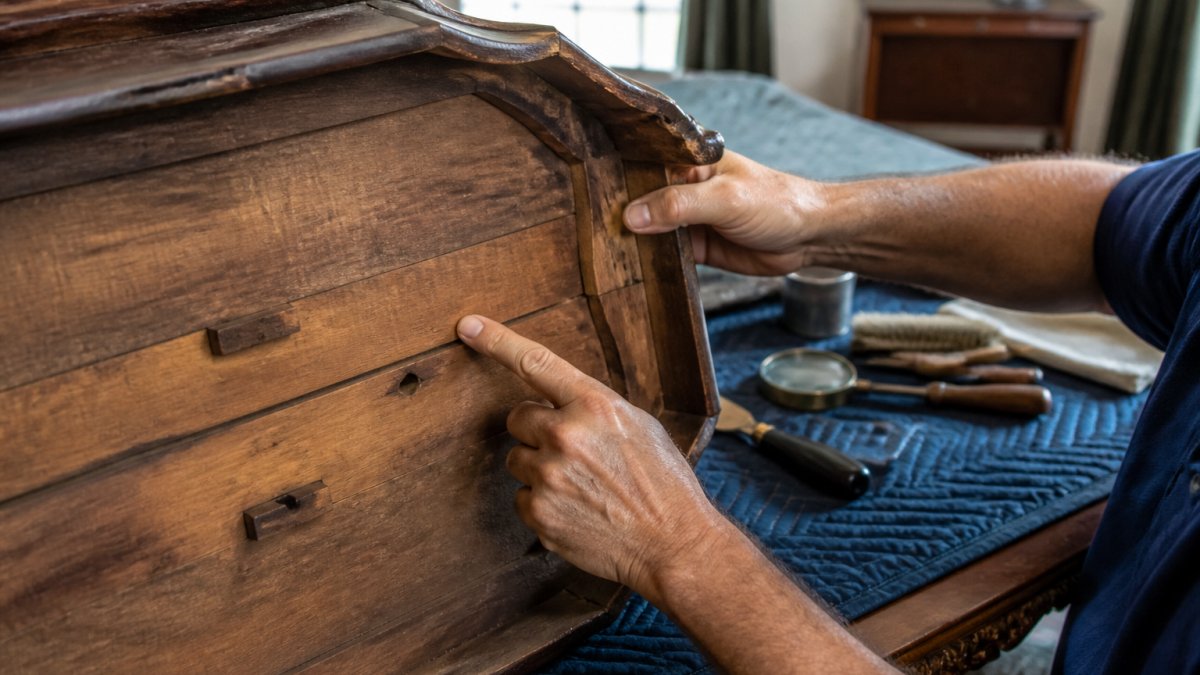
The location of marks varies by item type. Furniture makers often signed pieces on the underside, back, or inside of drawers. Ceramic and glass makers typically marked the bottom. Painters signed the front or back of canvases.
Start with obvious places: the bottom, underside, back, and interior. Use a flashlight to examine dark areas. Some marks are tiny. Run your fingers across surfaces, you might feel a signature you can't easily see.
For furniture, check drawer interiors, the underside of tabletops, and the back of case pieces. For ceramics and glass, turn items over and examine the base carefully.
Reading hallmarks, labels, and stamps
Hallmarks on jewelry and precious metals follow specific patterns. A hallmark typically includes a maker's mark, a purity mark (indicating metal content), and sometimes a date mark.
Labels on furniture, pottery, and decorative items can be equally revealing. A label from a furniture maker, pottery studio, or artist establishes provenance immediately. Preserve labels carefully, they're fragile but valuable.
Stamps and signatures on ceramics come in many forms: impressed into the clay, painted on, or printed. Some makers used consistent marks for years. Others changed their marks as their business evolved. Research the maker's typical marks to verify authenticity.
Step 4: Inspect Construction Details and Materials
Construction methods reveal age and quality. Mass-produced items use different techniques than handmade pieces. Understanding these differences helps you assess both authenticity and value.
Hand-cut dovetail joints in furniture
Dovetail joints are the gold standard for quality furniture construction. These interlocking joints appear primarily in drawer fronts and quality case construction. Hand-cut dovetails look slightly irregular and asymmetrical, that irregularity signals authentic handwork.
Machine-cut dovetails, which became common in the late 1800s, look perfectly uniform and symmetrical. Modern dovetails are even more precise.
Examine drawer sides and fronts carefully. Cheap furniture uses simple butt joints or nails. Quality pieces use dovetails or mortise-and-tenon joints. These construction details take time and skill, which means they cost more to produce and signal higher-quality pieces.
Hardware, underside, and interior clues
Hardware tells stories. Original hardware from the period when a piece was made adds value. Replacement hardware reduces value. Examine hinges, handles, and locks for style consistency and aging patterns.
Look at the underside of furniture. Is it finished or rough? Does the wood match the exterior? Cheaper pieces use rough wood underneath. Quality pieces often have finished undersides.
Interior construction reveals quality. Open a drawer and examine how it's built. Are the sides thick and solid or thin and flimsy? Is the bottom reinforced or just thin wood? Are there dust panels between drawers?
Step 5: Use Free Antique Identification Apps and Online Research
You don't need to hire an expert immediately. Free resources can help you identify items and estimate value before investing in professional appraisal.
Reverse image search and comparable listings
Take clear photos of items you want to identify. Use Google Images reverse search: upload your photo and see what comes up. You might find identical or similar items with identification information.
Check online marketplaces like eBay, Etsy, and specialized auction sites. Search for items matching your piece's description. Look at completed listings, these show actual selling prices, not asking prices.
Auction house websites often have extensive databases. Search for your item type and maker. Many auction results include photos and final prices. This research takes time but provides genuine market data.
Spotting reproductions and counterfeits
Reproductions are made to look old but are actually recent. Counterfeits are fraudulent copies of valuable pieces. Both are common in estates, especially with popular styles like Victorian furniture or Asian ceramics.
Authentic aging looks natural. Reproduction patina often looks painted on or artificial. Examine wear patterns, they should match how the piece would actually be used. A chair seat shows wear from sitting.
Check construction carefully. Modern reproductions often use modern techniques. A "Victorian" table with perfectly uniform wood stain and modern fasteners is likely a reproduction. Authentic pieces show variation and period-appropriate construction.
Step 6: Get an Antique Appraisal for Estate Items
After your initial research, you'll have a sense of which items might be valuable. Professional appraisers provide official valuations needed for insurance, estate settlement, and tax purposes.
When to hire a professional appraiser
Hire an appraiser for items you believe might be valuable, items with significant condition issues, and items you plan to sell. Appraisers cost money, typically $100-300 per hour or flat fees for specific items. This investment makes sense for potentially valuable pieces.
Choose appraisers with relevant expertise. A furniture appraiser might not be qualified to value fine art. An appraiser specializing in jewelry has different credentials than one handling ceramics. Ask about their qualifications, certifications, and experience with your specific item type.
Valuation using sold prices, not asking prices
Professional appraisers base valuations on comparable sales, not asking prices. They research what similar items actually sold for recently. This is crucial because asking prices often exceed actual market value by 20-50%.
Request that your appraiser document their methodology. They should identify comparable items, explain why they're comparable, and show the prices those items sold for. This documentation protects you and provides clear justification for the valuation.
For estate purposes, you need fair market value, what a willing buyer would pay a willing seller. This differs from insurance replacement value or auction estimate value.
Category-Specific Identification and Valuation
Different item categories require different identification approaches. Understanding category-specific markers helps you evaluate pieces more accurately.
Furniture holds significant value when it's from recognized makers, quality construction, and desirable styles.
Vintage rugs vary dramatically in value based on origin, age, materials, and condition.
Artwork requires authentication and condition assessment. Original paintings, prints by known artists, and sculptures hold value.
Glassware includes valuable categories like Tiffany glass, Depression glass, and fine crystal. Common glassware has minimal value. Research patterns and makers.
Jewelry value depends on materials, maker, condition, and style. Gold and silver content matters. Designer pieces command premiums.
Managing Family Disagreements and Next Steps
Estate settlement often involves family members with different ideas about what should happen with items.
Be transparent about valuations. Share appraisal reports with all parties. If family members disagree about an item's value, get a second appraisal.
Consider using a professional estate coordinator. WTS Solutions helps families navigate these decisions with compassion and expertise.
Document agreements in writing. If family members agree to specific distributions or sales, put it in writing. This prevents misunderstandings later.
For items nobody wants, consider donation. Many organizations accept antique furniture, artwork, and decorative items.
Frequently Asked Questions
What are five signs of a valuable antique?
Look for age (typically 100+ years old), rarity or limited production, maker's marks or signatures that confirm provenance, original materials and hand-crafted construction details, and good condition with natural patina rather than heavy restoration. Items with documented provenance and strong current market demand, such as mid-century furniture, fine art, quality jewelry, and vintage rugs, command higher prices. Cross-reference comparable sold prices on auction sites to verify market value rather than relying on asking prices alone.
How can I tell if an antique is authentic?
Inspect the construction methods: hand-cut dovetail joints in furniture, original hardware, and period-appropriate materials indicate authenticity. Check the underside, interior, and base for maker's marks, labels, or stamps. Look for natural wear and patina consistent with age, reproductions often show uniform wear or artificial aging. Use reverse image search and free identification apps to compare your item against documented examples. Be cautious of items with overly pristine finishes, mismatched hardware, or construction techniques that postdate the claimed era.
When should I get an antique professionally appraised?
Hire a certified appraiser for items you suspect are valuable, especially jewelry, fine art, high-end furniture, or pieces with significant provenance. Professional appraisals are essential for estate settlement, insurance, or tax purposes. If you find maker's marks or signatures, research comparable sold prices online first to gauge whether professional appraisal is warranted. For estate sales, appraisers help establish fair market value based on recent sales data, protecting you from underpricing during liquidation.
What is the best free antique identifier?
Reverse image search tools (Google Images, TinEye) and online marketplaces like eBay's sold listings, Worthpoint, and Ruby Lane let you find comparable antiques and their actual selling prices. Specialized databases for maker's marks, hallmarks, and signatures, such as those maintained by pottery and silver associations, help identify craftspeople. Mobile apps like Antique Identifier and similar tools use image recognition to suggest item categories and makers. Cross-reference findings across multiple sources to build confidence in identification before pursuing professional appraisal.