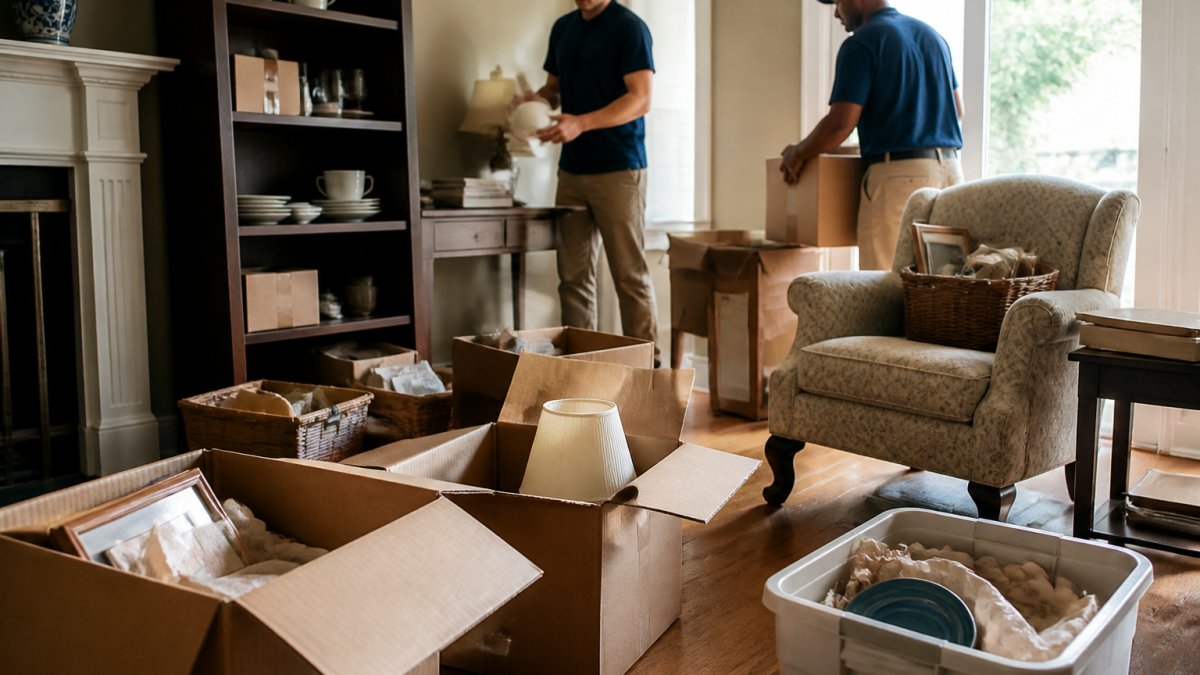
 how-to
How to Declutter a House After Death: A Full Guide
Table of Contents
- When to Start Decluttering a House After Death
- Your Estate Cleanout Checklist: Room by Room
- How Long Does It Take to Clean Out a House After Death
- How to Handle Sentimental Items After Death
- Tips for Dividing Belongings Among Family Members
- Donation, Estate Sales, and Eco-Friendly Disposal
- Digital Estate Management: What Most Families Overlook
- Conclusion
Last Updated: August 9, 2026
Losing a loved one is hard enough without the weight of an entire household pressing down on you. According to the American Psychological Association's resources on grief and bereavement, sorting through a deceased person's belongings ranks among the most emotionally taxing tasks a grieving family can face. At WTS Solutions, we work alongside families in Vancouver, Washington who navigate this challenge daily, and the single most important thing we've learned is that having a clear process makes all the difference.
This guide covers everything from first practical steps to details most families miss: digital accounts, hazardous materials, tax considerations, and how to keep family relationships intact. Below is a step-by-step framework you can actually use, even when you're running on empty.
When to Start Decluttering a House After Death
There is no universally correct timeline. Most estate attorneys and grief counselors suggest waiting at least two to four weeks after death before beginning a full cleanout, unless the property lease is expiring or the estate faces probate court deadlines.
A few tasks cannot wait:
- Securing the property (changing locks, canceling deliveries)
- Retrieving time-sensitive legal and financial documents
- Notifying utilities and stopping automatic payments
- Refrigerating or discarding perishable food
Some families feel ready to sort belongings within weeks; others need months. Both are valid. What matters is not moving so fast that you make irreversible decisions you'll regret, and not waiting so long that the property becomes a financial burden.
Your Estate Cleanout Checklist: Room by Room
A room-by-room approach is the most effective way to manage the physical and emotional logistics of a home cleanout. Working systematically prevents decision fatigue that comes from bouncing between spaces.

Start with low-emotional-weight rooms, garage, laundry room, utility closet, before moving to bedrooms and personal spaces. This builds momentum and sharpens your sorting instincts.
Room-by-room priority order:
| Room | Priority | Notes |
|---|---|---|
| Home office / filing area | First | Legal and financial documents live here |
| Garage / utility areas | Second | Low sentimental value, easier decisions |
| Living room | Third | Furniture, décor, shared items |
| Kitchen | Fourth | Appliances, pantry, dishware |
| Bedrooms | Fifth | Most personal; save for when you're ready |
| Attic / basement | Last | Often contains hidden heirlooms and hazards |
Securing Legal and Financial Documents First
Before a single box is packed, locate and secure all critical documents. Missing paperwork can delay probate by months and create legal complications.
Documents to retrieve immediately:
- The original will and any codicils
- Death certificates (request at least 10 certified copies from the Washington State Department of Health vital records office)
- Property deeds, vehicle titles, and mortgage documents
- Bank and investment account statements
- Insurance policies (life, home, auto, health)
- Tax returns from the last three to five years
- Social Security and pension documents
- Trust documents or powers of attorney
Create a dedicated folder for each category. Beneficiaries and the estate executor will need these repeatedly throughout probate, so organization at this stage saves enormous time later.
The Keep-Sell-Donate-Toss Sorting System
The keep-sell-donate-toss system forces a decision on every item rather than creating unresolved "maybe" piles.
Label four boxes clearly. For each item, ask: does this have sentimental value, financial value, charitable use, or none of the above? If none, it goes in the toss pile.
A common mistake is treating "keep" as a default for anything uncertain. Keep piles balloon quickly and often end up in storage units that cost money for years. Be honest about whether you'll actually use or display the item.
How Long Does It Take to Clean Out a House After Death
Cleaning out a house typically takes anywhere from a few days to several months, depending on the home's size, volume of belongings, and number of helpers.
A modest two-bedroom home with an organized owner might take a small family three to five focused days. A larger home accumulated over decades can require weeks of sustained effort or professional estate cleanout services.
Factors that extend the timeline include:
- Probate requirements that restrict selling or distributing assets
- Family members living out of state who need to coordinate visits
- Items requiring professional appraisal before sale or distribution
- Emotional exhaustion that makes sustained sorting impossible
Short sessions of two to three hours are often more productive than full-day marathons. Decision fatigue is real, and making poor choices about irreplaceable items because you're mentally depleted is a cost that can't be undone.
How to Handle Sentimental Items After Death
Sentimental items are the hardest part of any estate cleanout because they carry the weight of memory and mourning. Heirlooms, handwritten letters, clothing, and family photographs don't fit neatly into the keep-sell-donate-toss system.
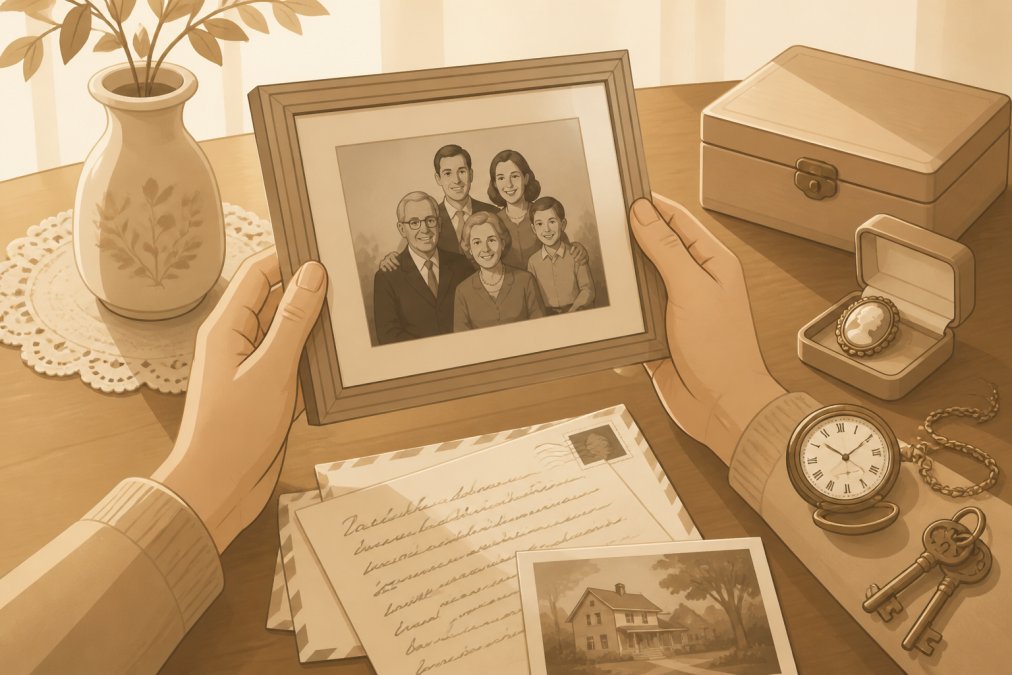
Give yourself permission to feel the grief these objects carry. Rushing this part doesn't work; it just delays the emotional reckoning.
Practical approaches that help:
- Photograph everything before distributing or discarding. A digital archive preserves memory without requiring physical storage.
- Create a memory box for each family member: a small, curated collection of genuinely meaningful items rather than keeping everything.
- Digitize letters, journals, and photographs through a local archival service. Digital copies don't degrade.
- Give yourself a waiting period on uncertain items. Set them aside for 30 days. If you haven't thought about them, you probably don't need them.
The goal is to make decisions you'll be at peace with a year from now.
Managing Decision Fatigue and Emotional Exhaustion
Decision fatigue is the documented phenomenon where decision quality deteriorates after long choosing sessions. During an estate cleanout, you might make hundreds of decisions in a single afternoon. By hour three, you're not making good choices.
Strategies that work:
- Set a hard stop time before each session
- Bring a trusted friend who isn't emotionally attached to the items
- Separate "easy" items from "hard" items and process them in different sessions
- Eat, hydrate, and take physical breaks every 90 minutes
Emotional exhaustion is not weakness. It's the natural result of grief work combined with physical labor and constant decision-making. Recognizing it early prevents regret from decisions made while depleted.
Tips for Dividing Belongings Among Family Members
Family conflict over belongings is one of the most common and painful complications of estate cleanouts. The items themselves are rarely the real issue; what's at stake is fairness, recognition, and unresolved family dynamics.
Dividing belongings goes more smoothly when there's a clear, agreed-upon process before anyone starts taking things:
- Start with the will. Any items specifically bequeathed are not up for negotiation.
- Inventory everything else. Create a written list before anyone expresses preferences.
- Use a round-robin selection system. Each family member takes turns choosing one item. Rotate the order each round.
- Get professional appraisals for high-value items. Third-party appraisals resolve disagreements more easily than family opinions.
- Bring in a neutral mediator for significant conflicts. Estate attorneys and professional coordinators can facilitate without emotional charge.
Family conflict during estate cleanouts is often about grief, not objects. Someone fighting to keep a particular chair may be fighting to hold onto the person who sat in it. Acknowledging that dynamic openly can defuse escalating situations.
Donation, Estate Sales, and Eco-Friendly Disposal
Once you've sorted what the family is keeping, you face decisions about everything else: donation, estate sale, individual sale, or disposal. The right mix depends on item volume, value, and your timeline.
Donation works well for clothing, furniture in good condition, kitchenware, and books. Local charities, Habitat for Humanity ReStores, and community organizations accept many household goods and move large volumes quickly.
Estate sales are most effective when the home contains significant furniture, collectibles, artwork, or household goods with real market value. Professional estate sales bring buyers to items rather than requiring the family to manage individual transactions.
Eco-friendly disposal matters more than most families realize. According to the EPA's guidelines on household waste and recycling, electronics, batteries, paint, and certain cleaning products require specific disposal methods and should never go in standard trash.
Tax Implications and Legal Considerations When Selling Items
Selling items from an estate has tax implications many families don't anticipate. Inherited property receives a "stepped-up basis," meaning the cost basis resets to fair market value at the date of death, not the original purchase price. This significantly reduces capital gains exposure when items are sold.
If the estate is large enough for federal estate tax, or if items generate significant proceeds, those transactions may need reporting. Consulting an estate attorney or CPA before a large estate sale is worth the time. The IRS guidance on estate and gift taxes provides current thresholds and rules.
Get professional guidance before the sale, not after.
Safety and Hazardous Waste During a Home Cleanout
Older homes can contain materials that pose genuine health risks during a cleanout.
Hazards to watch for:
- Prescription medications: Use a DEA-authorized drug take-back location or approved disposal method.
- Asbestos: Homes built before 1980 may contain asbestos in insulation, floor tiles, or ceiling materials. Do not disturb without professional assessment.
- Lead paint: Common in homes built before 1978. Sanding or scraping lead-painted surfaces without proper precautions creates serious health risks.
- Chemicals and solvents: Paints, pesticides, and cleaning chemicals require hazardous waste disposal.
- Mold: Attics, basements, and bathrooms frequently have mold requiring professional remediation before the space is safe.
If you're unsure about any material, stop and consult a professional. The cost of a safety assessment is far lower than the cost of a health problem.
Digital Estate Management: What Most Families Overlook
Digital estate management is locating, accessing, and closing or transferring a deceased person's online accounts, subscriptions, and digital assets. Most families don't think about this until they receive subscription charges or realize they can't access an email account containing important documents.
A deceased person's digital footprint typically includes:
- Email accounts (Gmail, Outlook, Yahoo)
- Social media profiles (Facebook, Instagram, LinkedIn)
- Online banking and financial accounts
- Subscription services (streaming, software, memberships)
- Cloud storage (Google Drive, iCloud, Dropbox)
- Cryptocurrency wallets or investment accounts
- Domain names or online businesses
Each platform has its own process for memorialization or closure. Facebook allows accounts to be memorialized or permanently removed with proof of death. Financial accounts require death certificates and often letters testamentary from probate court.
Cryptocurrency is a particular concern. Without access to private keys or seed phrases, digital currency assets may be permanently inaccessible. If your loved one held cryptocurrency, prioritize this during the initial document search.
Many families overlook digital photos and files. Cloud storage accounts may contain thousands of irreplaceable photographs. Before closing any account, ensure contents have been downloaded and backed up.
Conclusion
The process of decluttering a house after death is one of the most logistically and emotionally complex tasks a family can face. Between probate requirements, family dynamics, hazardous materials, digital accounts, and the sheer volume of accumulated belongings, it's easy to feel overwhelmed before you've started.
WTS Solutions exists to bridge that gap. Our team coordinates between grieving families and specialized professionals, estate sale companies, move management crews, and probate experts, who can turn an overwhelming process into a manageable one. Connect with WTS Solutions to get expert guidance for your estate transition, and let us handle the logistics while you focus on what matters most.
Frequently Asked Questions
What is the best way to start cleaning out a house after a death?
Start by securing the home and locating critical legal and financial documents: the will, death certificate, insurance policies, and bank statements. These take priority before any sorting begins. Once documents are safe, work room by room using a keep-sell-donate-toss system. Begin with lower-emotion spaces like garages or utility rooms before moving to bedrooms. Working in short sessions of two to three hours reduces decision fatigue and makes the process more manageable over time.
How long does it take to clean out a house after death?
The timeline varies widely depending on the size of the home, the volume of belongings, and how many family members are involved. A modest home may take several weekends spread over four to eight weeks. Larger estates or homes with decades of accumulated belongings can take three to six months, especially when probate is involved. Hiring professional estate cleanout support can significantly compress the timeline while reducing the emotional burden on the family.
How do you handle the emotional burden of decluttering a loved one's home?
Grief and logistics collide during a home cleanout, which makes the process harder than most families expect. Working in short sessions rather than marathon days helps prevent emotional exhaustion. Invite family members who share memories of the space. Take photos of items before donating or discarding them, this preserves the memory without keeping the object. If conflict arises or the grief process feels unmanageable, a professional coordinator can handle the logistics while you focus on mourning.
What are the legal considerations when clearing out a deceased person's home?
If the estate goes through probate, assets legally belong to the estate until a court distributes them to beneficiaries. Removing or selling items before probate closes can create legal complications. The executor has authority to manage personal belongings and coordinate estate liquidation, but should document an inventory first. Items sold may also have tax implications under IRS rules, proceeds from selling inherited property are generally subject to capital gains tax based on the stepped-up basis at the date of death.
This article was written using GrandRanker