 How-to
How Do You Clean Out a Hoarder House After Death?
Quick Summary
A hoarder house cleanout after death starts with a safety assessment for mold, biohazards, and unstable floors, then confirming who has legal authority over the property. Recover documents and valuables first, sort every item into keep, donate, sell, or discard, and work room by room. Bring in professionals when biohazards, structural damage, or heavy clutter exceed what your family can handle safely.
- Walk the property first and note blocked rooms, unstable floors, mold, pests, and sharps.
- Confirm legal authority with an estate attorney before removing or selling anything.
- Search for the will, deeds, insurance, bank records, jewelry, and keys before anything leaves the house.
- Give every item one of four outcomes: keep, donate, sell, or discard.
- Set a time limit per item or drawer so sorting does not stall.
Table of Contents
- Assessing the Hoarder House Before You Start
- Building a Hoarder House Cleanup Checklist
- Estate Cleanout After Death: Setting Priorities and Sorting Belongings
- How Long Does an Estate Cleanout Take?
- Working Through Grief, Sentimental Items and Family Disagreements
- When to Bring in Professional Hoarding Cleanup Services
- Booking Your Hoarder House Cleanout With WTS Solutions
- Frequently Asked Questions
Assessing the Hoarder House Before You Start
Before you touch a single box, take a careful look at the whole property. Walk through it slowly, and note which rooms are blocked, which floors look unstable, and where you see mold, pests, spoiled food, or sharp objects. A quick assessment can help you plan the hoarder house cleanout.
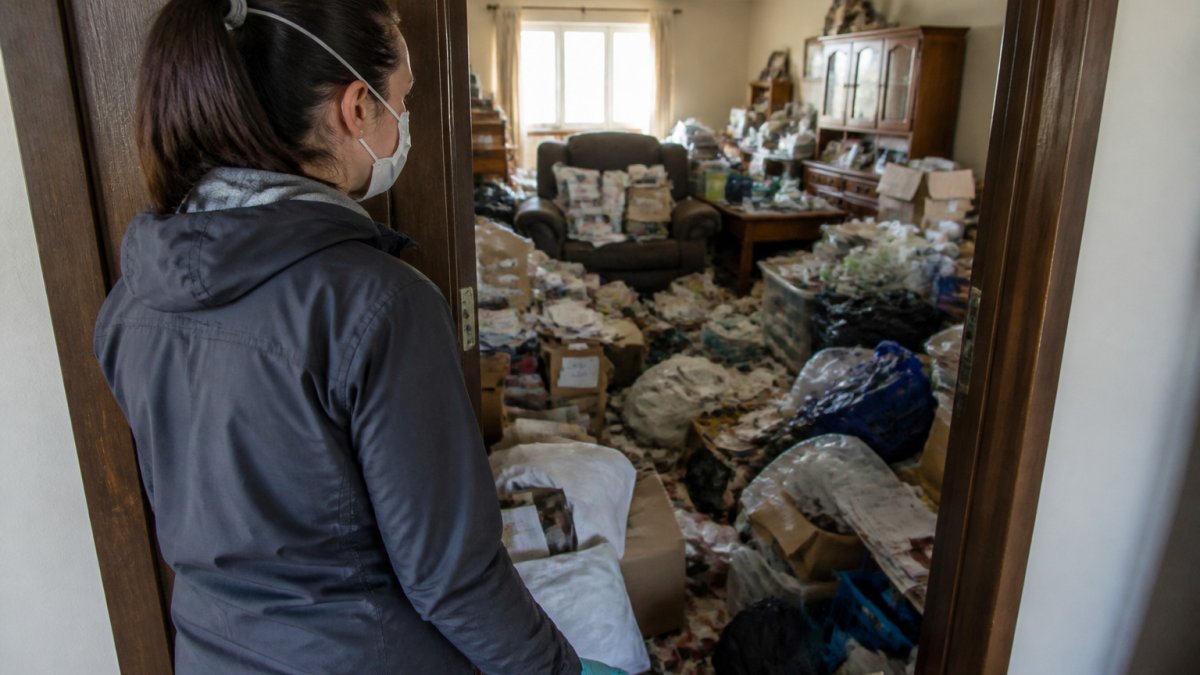
Take photos and short video as you go. Those records help you plan.
Checking for Biohazards and Structural Dangers
Hoarded homes can hide real health and safety risks. Look for:
- Mold on walls, ceilings, or stored materials
- Animal waste, urine, or infestations of rodents or insects
- Spoiled food, garbage, or decaying organic matter
- Sharps such as needles, broken glass, or nails
- Sagging floors, weakened stairs, or piles of heavy items stacked high
If you find anything that looks like biohazard material, stop before continuing. Do not enter areas where the floor or ceiling looks unsafe.
Confirming Legal Authority and Ownership Before Removing Property
Before you remove or sell anything, confirm who has the legal right to make decisions about the property.
Check with an estate attorney about what you are allowed to remove, sell, or give away. Taking items too early can create disputes with other heirs or problems with the estate's accounting. Keep a written inventory of anything you move out of the home.
Building a Hoarder House Cleanup Checklist
A written checklist keeps a large job manageable. It also helps you split the work among family members or hired help. A simple version might include:
- Confirm legal authority to act on the estate
- Complete the safety assessment and note hazards
- Secure utilities and gather personal protective equipment
- Set up a sorting area and a trash and donation staging zone
- Locate documents, valuables, and keys
- Plan the room-by-room order of work
- Schedule hauling, donation pickup, and any specialized cleaning
- Document the final condition of the property
Update the list as you go. Cross items off, add new ones, and note what still needs a decision.
Estate Cleanout After Death: Setting Priorities and Sorting Belongings
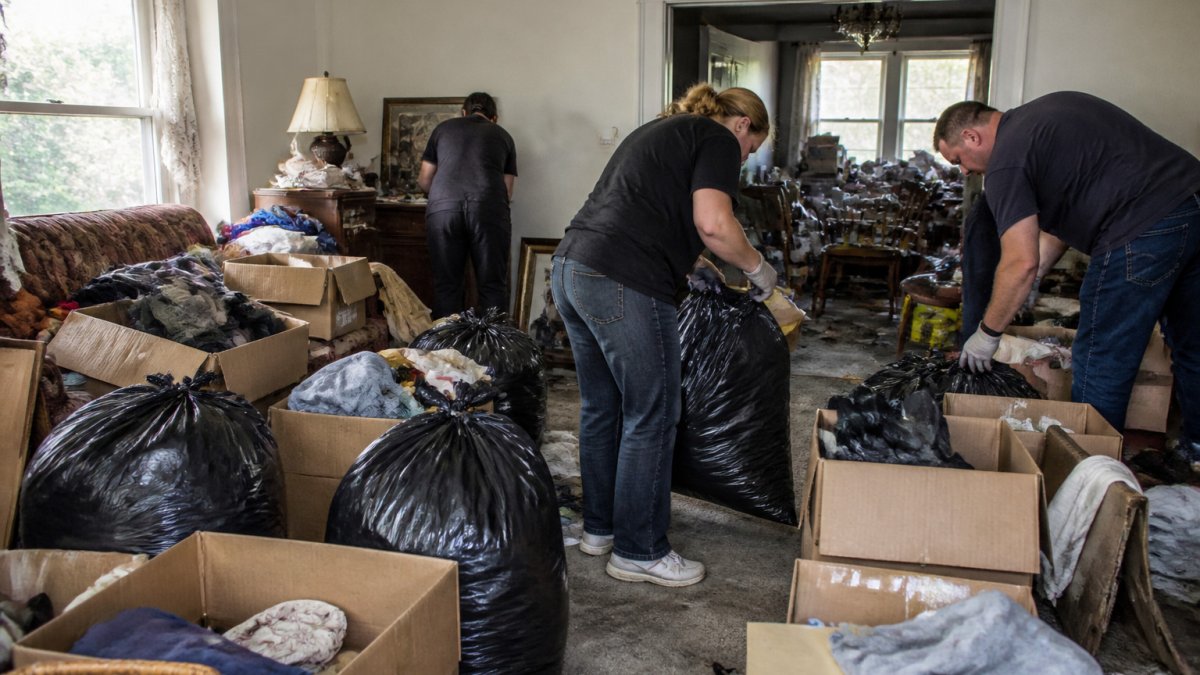
Start with the work that protects safety and value. Clear walkways and exits first. Then secure documents, valuables, medications, and anything that could cause harm. Save the sentimental items for later, when the family has more time to make decisions.
Set up a clear sorting area with room for four piles: keep, donate, sell, and discard. Working room by room keeps the job from feeling endless.
Keep, Donate, Sell, or Discard
Each item needs one of four outcomes. Here is a simple way to decide:
- Keep: Items that heirs want, that have clear personal value, or that the estate needs
- Donate: Usable clothing, furniture, and household goods in good condition
- Sell: Items with resale value, which an estate sale company or appraiser can help identify
- Discard: Broken, unsafe, or unsanitary items that no one can use
A common mistake is spending too long on each item. Set a time limit per item or per drawer, and move on when it runs out.
Recovering Documents and Valuables First
Before anything leaves the house, search for important papers and valuables. Look for:
- The will, trust documents, deeds, and insurance policies
- Bank statements, tax returns, and investment records
- Jewelry, coins, cash, and collections
- Keys, safe combinations, and account passwords
Place these items in a secure box and log where you found them. Losing a single document can delay the estate for months.
The article describes four outcomes every item needs and the order to recover valuables, which can be summarised as follows.
| Outcome | When it applies | Note |
|---|---|---|
| Keep | Heirs want it, clear personal value, or estate needs it | Decide before moving on |
| Donate | Usable clothing, furniture, household goods in good condition | Usable items only |
| Sell | Items with resale value | Estate sale company or appraiser can help identify |
| Discard | Broken, unsafe, or unsanitary items | No one can use them |
How Long Does an Estate Cleanout Take?
The timeline depends on the size of the home and how much is stored in it.
Plan in phases: safety and assessment, document recovery, sorting, hauling, and final cleaning. Build in breaks.
Working Through Grief, Sentimental Items and Family Disagreements
Grief can make the simplest decision feel impossible. It is normal to feel overwhelmed, angry, or numb while sorting a parent's belongings. Take breaks. You do not have to finish in one weekend.
Siblings may want different things, or may remember the same object differently. A few approaches can help:
- Agree on ground rules before the work starts, such as who has final say on what
- Set aside a few sentimental items for each person to choose first
- Use a neutral third party, such as an estate professional, to keep decisions moving
- Put disputed items in a separate box and revisit them later
When to Bring in Professional Hoarding Cleanup Services
Consider professional help if the home has biohazards, structural damage, or more clutter than your family can safely handle.
If you are unsure where to start, it is reasonable to decide how much support you need.
Booking Your Hoarder House Cleanout With WTS Solutions
You do not have to face this alone. WTS Solutions supports families through the logistics of probate-related property transitions, estate sale coordination, and move management. Our team can help coordinate the asset transition.
To talk through your situation and get a quote, contact WTS Solutions.
Frequently Asked Questions
How do you start cleaning out a hoarder house after someone dies?
Start with safety and authority, not with the clutter. Before removing anything, check with an estate attorney about who has authority to act for the estate. Then walk the home and check for mold, sharp objects, pests, weak floors and any signs of biohazards. Photograph rooms before you touch them.
How long does an estate cleanout take?
Timing depends on the size of the home, how much is stored, the condition of the property and how many people are working.
Should I hire a professional hoarding cleanup service?
Consider professional help if the home has biohazards, structural damage, or more clutter than your family can safely handle. Requesting a quote from WTS Solutions can help you discuss your situation.
What should I check for before removing items from an estate?
Before handling the property, check with an estate attorney about who has authority to act. When in doubt, pause and ask the estate attorney before discarding anything.