 How-to
Eco-Friendly Estate Cleanout and Donation Options Guide
Last Updated: November 5, 2026
Quick Summary
An eco-friendly estate cleanout starts with sorting every item into keep, donate, recycle or dispose piles, room by room. Usable goods go to charities that accept them, metal and electronics go to recyclers, and hazardous materials need separate disposal. Keeping an inventory and written donation records makes the whole process smoother.
- Sort items into four groups: keep, donate, recycle and dispose.
- Work one room at a time and finish each room before starting the next.
- Confirm which charities accept each category before pickup day.
- Many charities no longer accept used mattresses, so check before scheduling.
- Keep a written record of every donation, with charity name, date and item descriptions.
Table of Contents
- Why an Eco-Friendly Estate Cleanout Starts With Sorting
- Estate Cleanout Checklist: Room-by-Room Sorting Workflow
- How to Donate a Whole Home and Its Contents
- Furniture Donation Pickup and Donation Acceptance Rules
- Estate Cleanout Recycling and Responsible Disposal
- Comparing DIY, Charity Pickup, Resale, and Professional Cleanout Costs
- Start Your Estate Cleanout With WTS Solutions
- Frequently Asked Questions
Clearing out an estate is hard enough without wondering where everything will end up. Families in Vancouver, Washington, often want to keep usable items out of the landfill, yet they are not sure how to start. Eco-friendly estate cleanout and donation options let you reuse, recycle and rehome much of a household.
Why an Eco-Friendly Estate Cleanout Starts With Sorting
Sorting decides how much of an estate can be donated, recycled or reused. Without a plan, usable furniture ends up in the same bin as broken lamps. U.S. Census Bureau population estimates for adults 65 and older shows how many older Americans are aging in place, so many families face this task.
Start by separating items into four simple groups:
- Keep: Items the family wants for memories or use
- Donate: Clean, working goods that charities can use
- Recycle: Metal, electronics and materials with a recycling route
- Dispose: Items that cannot be reused or recycled
Sorting first saves money and keeps good items out of landfill. It also makes every later step faster.
Estate Cleanout Checklist: Room-by-Room Sorting Workflow
Work one room at a time. Finish a room before you start the next one. This keeps boxes from spreading across the house.
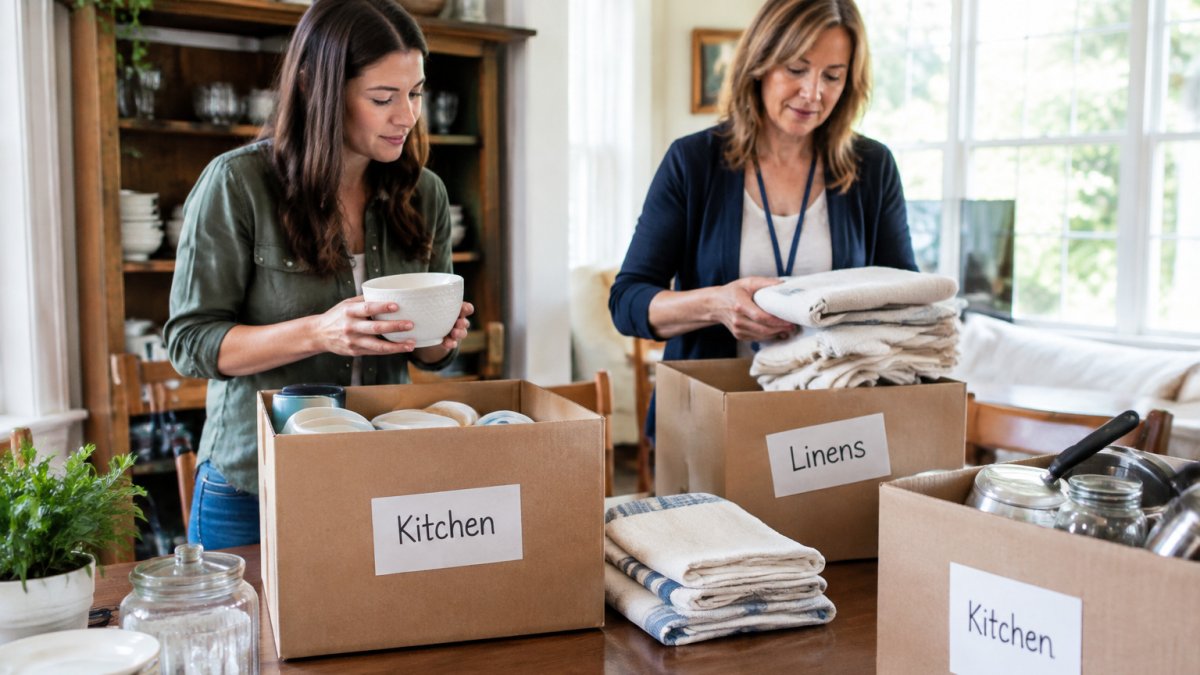
- Label a bin for each category in every room
- Photograph valuable or sentimental items before moving them
- Check pockets, drawers and closets for paperwork
- Set aside anything with personal information for shredding
Working in a fixed order helps make sure no room gets missed. Keep an inventory list as you go. estate inventory checklist | how-to-organize-an-estate-inventory-list-step-by-step
How to Donate a Whole Home and Its Contents
Some services collect a whole home at once. Confirm which charities will accept each category before pickup day.
Donating a whole home takes coordination. Ask the donation partner to give you a written list of accepted items. Keep the list with your sorting bins.
Furniture Donation Pickup and Donation Acceptance Rules
Many charities publish condition standards. Knowing the rules before you load a truck can help avoid wasted pickup trips.
Category-by-category acceptance checklist
- Upholstered furniture (sofas, chairs, sectionals): Generally accepted when frames are sturdy, fabric is free of rips, stains, pet odor and smoke smell, and there are no pest signs. Many charities decline sleeper sofas and recliners with broken mechanisms.
- Mattresses and box springs: The strictest category. Many charities no longer accept used mattresses because of hygiene and state bedding regulations. Confirm before scheduling; some areas have dedicated mattress recyclers instead.
- Case goods (dressers, tables, bookcases): Accepted when drawers slide, legs are intact and surfaces are not delaminating. Missing hardware is usually fine; structural damage is not.
- Appliances: Working refrigerators, stoves, washers and dryers are often accepted; units that do not run usually are not. Some charities require the item to be plugged in and demonstrated at pickup.
- Clothing and linens: Accepted when clean and dry. Charities typically reject items with mildew, heavy staining or missing buttons/zippers only if they cannot be sold; many still route torn textiles to rag recyclers.
- Small household goods: Dishes, pots, lamps and decor are usually welcome when clean and complete. Sets missing pieces are often declined.
- Electronics: Older tube televisions and monitors are frequently refused. Working laptops and phones may be accepted by specialized reuse organizations.
- Cribs, car seats and helmets: Often refused for safety and liability reasons regardless of condition.
Items that cannot be donated
Plan separate disposal or household hazardous waste drop-off for hazardous materials and similar items.
Pickup logistics to confirm
- Whether the charity picks up at all, or only above a minimum load
- Whether pickup is free, fee-based, or limited to certain ZIP codes
- Stair, elevator and driveway access requirements
- Whether items must be curbside or inside the home
- Scheduling windows and cancellation policies
Documenting donations and tax receipts
Keep a written record for every donation: charity name, date, location, and a description of each item. For noncash contributions, the IRS has recordkeeping and substantiation rules that depend on the value of the donation. Photograph valuable items before pickup and keep the photos with your inventory. These are general recordkeeping rules, not tax advice, confirm how they apply to the estate with a tax professional.
IRS guidance on noncash charitable contributions
Estate Cleanout Recycling and Responsible Disposal
Recycling and disposal need the same care as donation. Electronics, batteries, paint and cleaning products often need special handling and cannot go in household trash. Metal, appliances and clean wood can often go to recycling centers.
Check with your local waste provider about hazardous materials before pickup day. Plan hazardous items separately before pickup day.
Comparing DIY, Charity Pickup, Resale, and Professional Cleanout Costs
Most guides tell you the options exist but not how to choose between them. The honest comparison is not just dollars, it is time, eligibility and what actually happens to the items.
DIY cleanout
- Cash cost: Dumpster rental, hauling vehicle, disposal fees and dump-ticket charges. Costs vary by location and provider.
- Time: The largest hidden cost. A full house typically takes multiple weekends for a family working around jobs and grief.
- Eligibility: Unlimited, you decide what to keep, donate or recycle.
- Outcome: Highest control, highest physical and emotional load. Best when the estate is small or the family wants to handle belongings personally.
Charity pickup
- Cash cost: Varies by charity; some charge a pickup fee or require a minimum load.
- Time: Low for you, though scheduling time depends on the charity.
- Eligibility: Limited to accepted categories and condition standards. Rejected items still need another route.
- Outcome: Good for clean, working furniture and household goods. Poor fit for damaged items, mattresses in many areas, or hazardous materials.
Resale and upcycling
- Cash cost: Listing fees, photography time, packing materials and shipping if sold online.
- Time: Highest per item. Photographing, listing, answering buyers and coordinating pickups can consume more hours than the sale is worth for low-value goods.
- Eligibility: Buyer-dependent; niche or vintage items do best.
- Outcome: Can recover money on antiques, tools, jewelry and collectibles, but is a poor use of time for ordinary furniture and clothing.
Professional cleanout
-
Cash cost: Pricing depends on quantity, dates, and delivery; request a quote from WTS Solutions for current rates.
-
Time: Lowest for the family.
-
Outcome: Best when the estate is large, the timeline is short, or the family lives out of area.
A simple decision framework
- Choose DIY when the home is small, you have weeks of availability, and you want to handle belongings yourself.
- Choose charity pickup when most items are clean, working and in accepted categories.
- Choose resale only for identifiable high-value items, not as a whole-house strategy.
- Choose professional cleanout when time, distance or volume makes DIY unrealistic, and ask the provider in writing how they handle donation and recycling versus landfill. Our step-by-step guide to hiring estate cleanout services explains what to expect from them.
Ask each provider how items are donated, recycled, or disposed of before signing.
The four main routes differ in cost, time, eligibility and outcome, as summarised below.
| Option | Best for | Key difference |
|---|---|---|
| DIY cleanout | Small homes, flexible timelines | Highest control, highest physical and emotional load |
| Charity pickup | Clean, working furniture and goods | Limited to accepted categories and condition standards |
| Resale and upcycling | Identifiable high-value items | Highest time per item, buyer-dependent |
| Professional cleanout | Large estates, short timelines, out-of-area families | Lowest time for the family; request a written quote |
Start Your Estate Cleanout With WTS Solutions
You do not have to face this alone. anchor words to see how WTS Solutions can take over the cleanout work from start to finish. You can also browse our insights for more guidance on planning a smooth transition. Our team is ready to help your family plan an eco-friendly cleanout that honors your loved one.
Frequently Asked Questions
What is the best way to clean out an estate?
Start with a room-by-room sort into four piles: keep, donate, recycle, and dispose. Begin with the rooms holding the least sentimental value, such as the garage or kitchen, and set aside documents, jewelry, and photos for family review before anything leaves the house. Working in one room at a time keeps the process manageable and makes it easier to hand off sections to a crew or a family member. Pricing for professional help depends on quantity, dates, and delivery, so request a quote from WTS Solutions for current rates.
What items can be donated during an estate cleanout?
Most charities accept clean, working furniture, clothing, shoes, linens, kitchenware, books, and small household goods. Items usually need to be in good, usable condition, free of stains, odors, pests, and missing parts. Mattresses, cribs, upholstered items with damage, and most electronics with broken parts are often refused. Check each recipient's current acceptance list before scheduling a pickup, since rules vary by organization and by location in Vancouver, Washington.
Can I get a tax deduction for donating estate belongings?
Donations of household goods to a qualified charity can be tax-deductible if you itemize deductions on your federal return. Ask the recipient for a written receipt listing the date, the organization, and a description of the items. Record the fair market value of each donated item, which is generally what a willing buyer would pay for it used. For larger or unusual items, a written appraisal may be required. Consult a tax professional for guidance specific to the estate.
What if some items cannot be donated or recycled?
Items that no charity or recycler will accept usually go to a licensed waste facility or a roll-off dumpster. Hazardous materials such as paint, solvents, batteries, and pesticides should never go in household trash. Many local waste programs accept these at designated drop-off days or facilities, so check with the city or county before disposal. Sensitive personal papers should be shredded rather than discarded whole.
Connect with WTS Solutions today to start planning a compassionate, organized cleanout for your family.