 listicle
Best Probate Assistance for Executors: Compare Options
Table of Contents
- How to Choose the Best Probate Assistance for Executors
- Quick Comparison of Probate Assistance Options
- WTS Solutions: Full-Service Estate Transition Support
- DIY Tools and Software for Self-Guided Executors
- When You Need a Probate Attorney
- How Much Does a Probate Lawyer Cost?
- Hourly Billing: The Default but the Most Unpredictable
- Flat Fees: Predictable but Scope-Limited
- Percentage-of-Estate Fees: The Most Expensive Option for Large Estates
- The Hidden Cost Executors Forget: Their Own Fees
- What the Fee Should Cover: A Checklist Before You Sign
- Free Consultations and Referral Networks
- Executor of Estate Duties Timeline: What to Expect
- Use a Probate Executor Checklist to Stay on Track
- Frequently Asked Questions
Last Updated: September 6, 2026
Serving as executor is one of the most complex roles a family member can take on, often arriving at the worst possible time. The best probate assistance combines clear legal guidance with practical, hands-on support.
The challenge is that "probate assistance" spans everything from free DIY checklists to full-service law firms and transition management companies. This guide breaks down the options.
How to Choose the Best Probate Assistance for Executors
Probate assistance is any service, tool, or professional that helps an executor settle an estate. The right choice depends on the estate's size, the complexity of asset distribution, and how much time you can dedicate.
Most executors are adult children managing a parent's estate for the first time, grieving, often out of state, and inexperienced with probate court, creditor claims, or asset distribution. A common mistake is assuming the process is straightforward because the will names an executor; the role carries significant fiduciary duty and potential liability if steps are missed.
What You Need vs. What You Can Skip
Before spending money, clarify what you actually need. Every estate requires filing the will, notifying beneficiaries, inventorying assets, and handling creditor claims, but not every estate requires a lawyer.
- Skip legal representation if the estate is small, uncontested, and the will is straightforward.
- Consider document software if you only need help preparing court filings.
- Hire a probate attorney if there are disputes, complex assets, or questions about executor compensation.
- Use a transition service if the estate includes a physical home that needs clearing, organizing, and sale preparation.
Quick Comparison of Probate Assistance Options
The table below summarizes the main categories of probate assistance available to executors, based on the level of support you need.
| Assistance Option | Best For | What It Handles | Typical Commitment |
|---|---|---|---|
| Transition management (WTS Solutions) | Full-service physical and logistical estate transition | Move-outs, estate sales, coordination with professionals | Hands-off for the family |
| DIY executor platforms (Executor.org, Heirloom) | Self-guided executors with simple estates | Checklists, task tracking, educational resources | High personal involvement |
| Document creation tools (Trust & Will, LegalZoom, Nolo) | Preparing wills or basic court documents | Legal forms, filing templates | Minimal legal guidance |
| Probate attorney (Senior Solutions Law, American Wills and Estates) | Complex or contested estates | Court representation, legal counsel, tax guidance | Moderate; attorney handles filings |
WTS Solutions: Full-Service Estate Transition Support
WTS Solutions provides compassionate, comprehensive support to families navigating the complex transitions associated with a loved one's estate. We act as a bridge between grieving families and the specialized professionals needed to settle an estate.
WTS Solutions offers hands-on coordination of the transition itself. If the estate includes a house full of belongings, our dedicated crews handle the move-out from homes and assisted living facilities, partnering with estate sale companies for efficient asset liquidation.
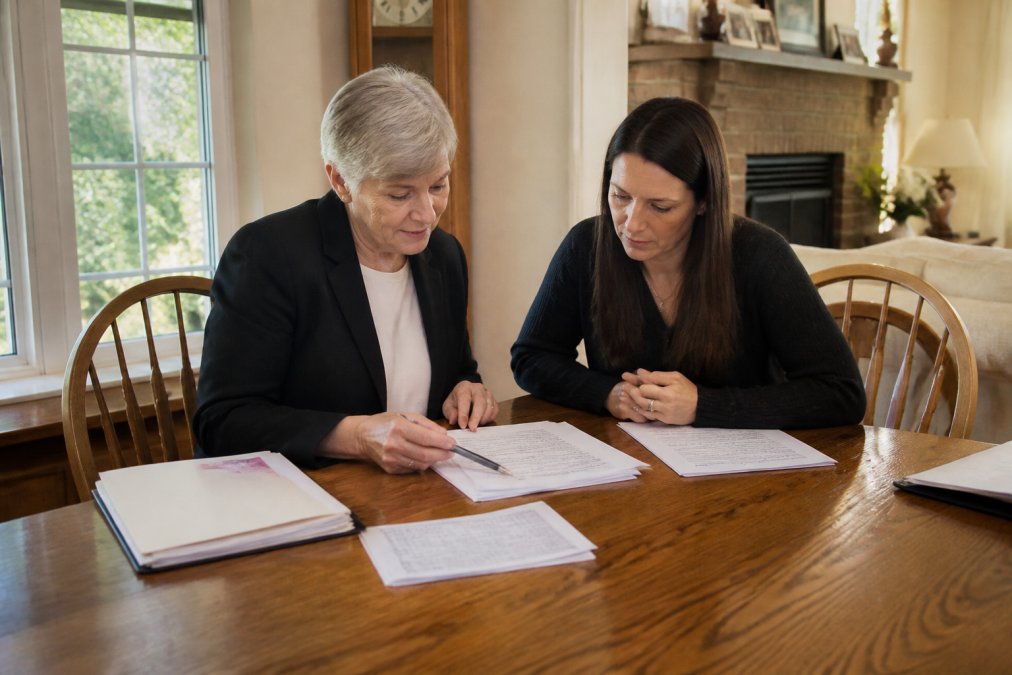
For families in Vancouver, Washington, the emotional weight of sorting through a parent's possessions while managing probate is significant. WTS Solutions handles the logistics of asset transition and relocation with care.
DIY Tools and Software for Self-Guided Executors
If the estate is modest and you have time for paperwork, DIY tools provide a structured path through estate administration. These platforms do not offer legal representation, but they organize the process.
Executor.org and Heirloom: Free Planning Resources
Executor.org offers a customized, step-by-step executor plan with task tracking and educational resources at no cost. The limitation is that it does not provide legal representation or advice.
Heirloom serves a similar role as a free resource hub with educational guides, checklists, and a directory of probate professionals.
Trust & Will, LegalZoom, and Nolo: Document Creation
Document creation platforms help prepare the legal paperwork involved in estate planning and probate. Trust & Will simplifies will and trust creation with guidance on avoiding lengthy probate processes.
LegalZoom is a well-known platform for online will and trust creation with state-specific compliance checks, though it is not a substitute for legal counsel in contested probate. Nolo's WillMaker provides comprehensive estate planning software with state-specific document generation.
When You Need a Probate Attorney
Probate assistance from an attorney becomes necessary when the estate faces complications: beneficiary disputes, unclear wills, significant estate taxes, or creditor challenges. An attorney provides court representation and ensures compliance with state laws.
Do not delay hiring an attorney until a dispute arises. If you have questions about executor liability or will interpretation, a free consultation can clarify your obligations.
Senior Solutions Law and American Wills and Estates
How Much Does a Probate Lawyer Cost?
Probate lawyer costs are one of the first questions executors ask, yet most legal guides dodge the numbers. Fees fall into three billing models, hourly, flat fee, and percentage of estate value, and the model you choose can change your total cost.
Hourly Billing: The Default but the Most Unpredictable
Most probate attorneys bill hourly. A straightforward, uncontested probate might take a certain number of hours. But hourly billing means every email, phone call, and court appearance adds to your bill.
Before signing an hourly engagement, ask for a written estimate of total hours by phase, filing, creditor notification, asset inventory, tax work, and distribution, and whether paralegal time is billed at a lower rate.
Flat Fees: Predictable but Scope-Limited
Flat-fee representation has grown in popularity because it removes the anxiety of an open-ended meter. Firms typically charge a flat fee for an uncontested estate. The catch is scope: a flat fee usually covers standard filings and notifications but often excludes litigation, complex tax filings, or real estate transactions.
When comparing flat-fee quotes, demand a written list of what is excluded. The cheapest flat fee may look attractive until a single contested creditor claim triggers an add-on.
Percentage-of-Estate Fees: The Most Expensive Option for Large Estates
Some states permit attorneys to charge a percentage of the estate's gross value. This model is common in states with statutory fee schedules.
If an attorney proposes a percentage-based fee, ask whether they will agree to a flat fee or hourly rate that reflects actual complexity. Many will negotiate.
The Hidden Cost Executors Forget: Their Own Fees
Most executors are entitled to compensation for their time, but few claim it, and even fewer understand how it interacts with attorney costs. Executor fees are typically a reasonable hourly rate or a percentage of the estate's value, depending on state law and the will (nolo.com). If you are also paying an attorney, your fee should reflect only the administrative tasks you perform.
One critical tax trap: executor fees are taxable income to you personally (irs.gov). Many executors waive their fee to avoid the tax burden, especially if they are also inheriting assets, but if you waive it, you cannot later claim it as a deduction against the estate's income tax.
What the Fee Should Cover: A Checklist Before You Sign
Before engaging any probate attorney, request a written fee agreement that explicitly answers these questions:
- Are court filing fees and publication costs included or billed separately?
- Are phone calls and emails with beneficiaries billable in 6-minute increments?
- Is the fiduciary tax return (Form 1041) included, or does it require a separate engagement?
- Will the attorney handle creditor disputes, or is that considered litigation with a separate fee?
- Is there a surcharge for out-of-state real estate or business interests?
Free Consultations and Referral Networks
Most probate attorneys offer a free 30-minute initial consultation. Use this time to interview the attorney, not just to hear their pitch. Ask how many estates they have administered in your specific county, because probate rules vary by local court. For referrals, your state bar association's lawyer referral service and the National Association of Estate Planners & Councils directory are reliable starting points.
The bottom line: probate legal costs are negotiable, and the model you choose matters. A flat fee with a clear scope can be a good value for an uncontested estate.
Executor of Estate Duties Timeline: What to Expect
The executor of estate duties timeline typically spans 6 to 18 months, depending on the estate's complexity and whether disputes arise (americanbar.org).
- Weeks 1-4: Locate the will, file it with the probate court, and petition for appointment as executor. You will receive letters testamentary, which grant you authority to act on the estate's behalf.
- Weeks 4-8: Notify beneficiaries and creditors of the decedent's passing. Publish required notices and begin compiling an inventory of assets.
- Months 2-6: Manage estate assets, pay ongoing expenses, and address creditor claims. This period often includes coordinating the physical transition of the home.
- Months 6-12: File the fiduciary tax return and prepare for asset distribution to beneficiaries.
- Final phase: Distribute remaining assets, obtain receipts, and petition the probate court for discharge.
Use a Probate Executor Checklist to Stay on Track
A probate executor checklist is the single most effective tool for managing the process without missing critical steps. Executor.org and Heirloom offer free digital checklists.
- Obtain certified copies of the death certificate
- Locate and secure the original will
- File the will with the probate court
- Open a dedicated estate bank account
- Notify Social Security, banks, and insurance companies
- Inventory all estate assets, including digital accounts
- Notify creditors and publish required notices
- Secure the home and arrange for property maintenance
- Coordinate estate sale or asset liquidation
- File the final fiduciary tax return
- Distribute assets and obtain beneficiary receipts
One area most guides overlook is digital asset management. Executors must identify and secure online accounts, cryptocurrency holdings, and digital files. Failing to document these assets creates complications for beneficiaries.
For executors facing the dual challenge of probate paperwork and physical estate transition, the support of a company like WTS Solutions can mean the difference between months of stress and a managed, organized process.
Serving as executor brings legal responsibilities, financial decisions, and the emotional weight of settling a loved one's life. WTS Solutions provides compassionate, comprehensive support that bridges the gap between grieving families and qualified professionals. Our dedicated team handles the logistics of asset transition and relocation with care, allowing you to focus on what matters most during difficult times. Connect with WTS Solutions to ease the burden and ensure a smooth, organized transition.
Frequently Asked Questions
What is the normal fee for an estate executor?
Executor compensation varies by state law and the estate's size. Some states set a percentage of the estate value, while others pay a "reasonable" amount based on the work performed. If you are unsure what is appropriate, consult your probate court's guidelines or ask a probate attorney. Remember that you can decline compensation if you prefer, which is common when you are also a beneficiary.
What do you do if you can't afford a probate lawyer?
If legal fees are a concern, start with free or low-cost resources. Executor.org and Heirloom offer free checklists and educational guides. Some courts provide self-help centers with forms and instructions. For specific legal questions, ask attorneys if they offer a free consultation or flat-fee services rather than hourly billing. You can also handle simpler estates yourself with the right tools and step-by-step support.
How long does the probate process typically take?
A straightforward probate case usually takes 6 to 12 months from the court filing to the final distribution of assets. Complex estates, contested wills, or disputes among beneficiaries can extend this timeline to two years or more. The executor of estate duties timeline includes filing the will, notifying creditors, inventorying assets, and filing tax returns. Each step has deadlines, so staying organized helps prevent delays.
What are the primary responsibilities of an estate executor?
The executor's main duties are to locate and protect estate assets, file the will with the probate court, notify beneficiaries and creditors, pay valid debts and taxes, and distribute what remains according to the will. Executors must also keep detailed records and act in the estate's best interest. A probate executor checklist can help you track these tasks and meet court deadlines.
Who has more power, a beneficiary or executor?
The executor has the legal authority to manage the estate during probate, granted by the court through letters testamentary. Beneficiaries do not have the power to direct how the executor performs their duties. However, beneficiaries can challenge an executor's actions in probate court if they believe the executor is violating their fiduciary duty or mismanaging estate assets.